#38 in the Top 50 Hotels in the World · Yufuin Onsen, Kyushu
Yufuin Tamanoyu
Sixteen rooms in a wood that used to shelter Zen priests, and a kitchen that now feeds them better.
Sixteen rooms in a wood that used to shelter Zen priests, and a kitchen that now feeds them better.
Yufuin Tamanoyu ranks #38 on our Top 50 Hotels in the World for 2026. It is a 16-room ryokan in roughly 2.5 acres of private woodland in Yufuin Onsen, Kyushu, that began as a retreat for Zen priests. Expect private cedar spring baths, superb Oita kaiseki, and rates from 41,950 yen per person including both meals.
"A former Zen retreat that still behaves like one, except the kitchen now cooks one of the best set dinners in rural Japan."
Editorial aggregate 9.2/10 across six criteria including service, location, and value. Independently scored on our published methodology. This is our opinion, not an average of user reviews.
Yufuin Tamanoyu is open and trading normally in 2026, taking bookings direct and through Japan's main reservation platforms. It is a 16-room ryokan spread across roughly 2.5 acres of natural woodland at 2731-1 Yufuincho Kawakami in Yufu, Oita Prefecture, on Kyushu, Japan's southern island. The rooms are not stacked in a block. They sit low among the trees, linked by footpaths that pass a restaurant, a tea room, a bar, and a small shop, so a stay feels closer to borrowing a private estate than checking into a hotel.
Within Japan its standing is settled. Tamanoyu is counted, with Kamenoi Besso and Sanso Murata, among the big three ryokan of Yufuin Onsen, the hot-spring town that sits in a green valley below the twin peaks of Mount Yufu. It also features in the Japan National Tourism Organization's official luxury collection. That domestic reputation, built over seven decades rather than bought with a brand name, is exactly why it earns a place on a world list between two Aman resorts.
Yes, and the claim comes from the ryokan itself rather than marketing folklore. Tamanoyu's own history describes the property as a sanatorium for Zen priests, a lodge where monks came to rest and take the waters, before it opened as an inn in 1953. The woodland is younger than it looks: the grounds were converted from rice paddies into forest in the 1940s, and eighty years of growth have produced a dappled, layered garden that reads as ancient. The monastic inheritance is the operating principle, not a plaque on a wall. There is no lobby spectacle, no spa menu, no programming. The property assumes you came to be quiet, walk under trees, soak, eat well, and sleep, and it removes everything that does not serve that sequence.
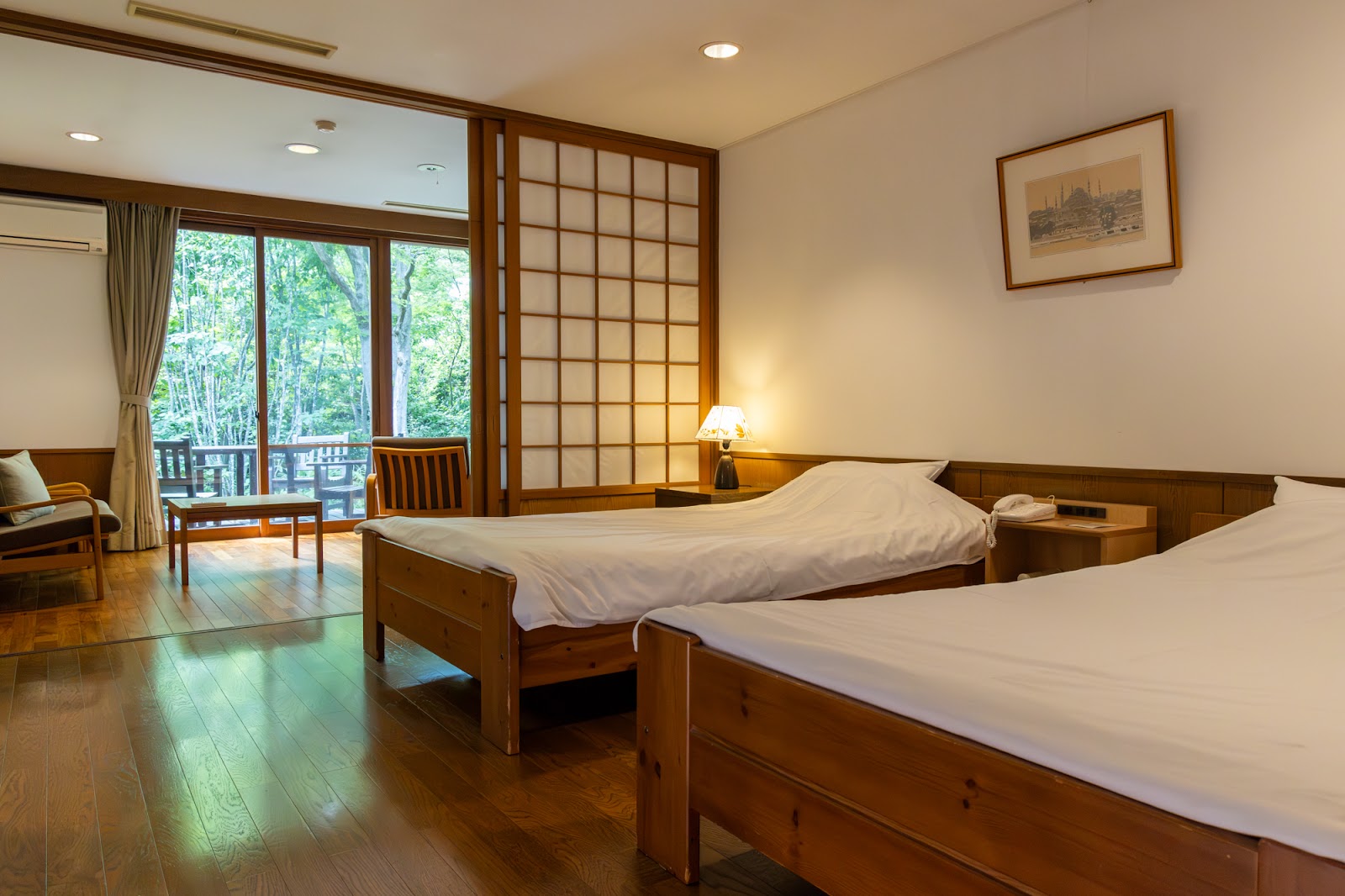
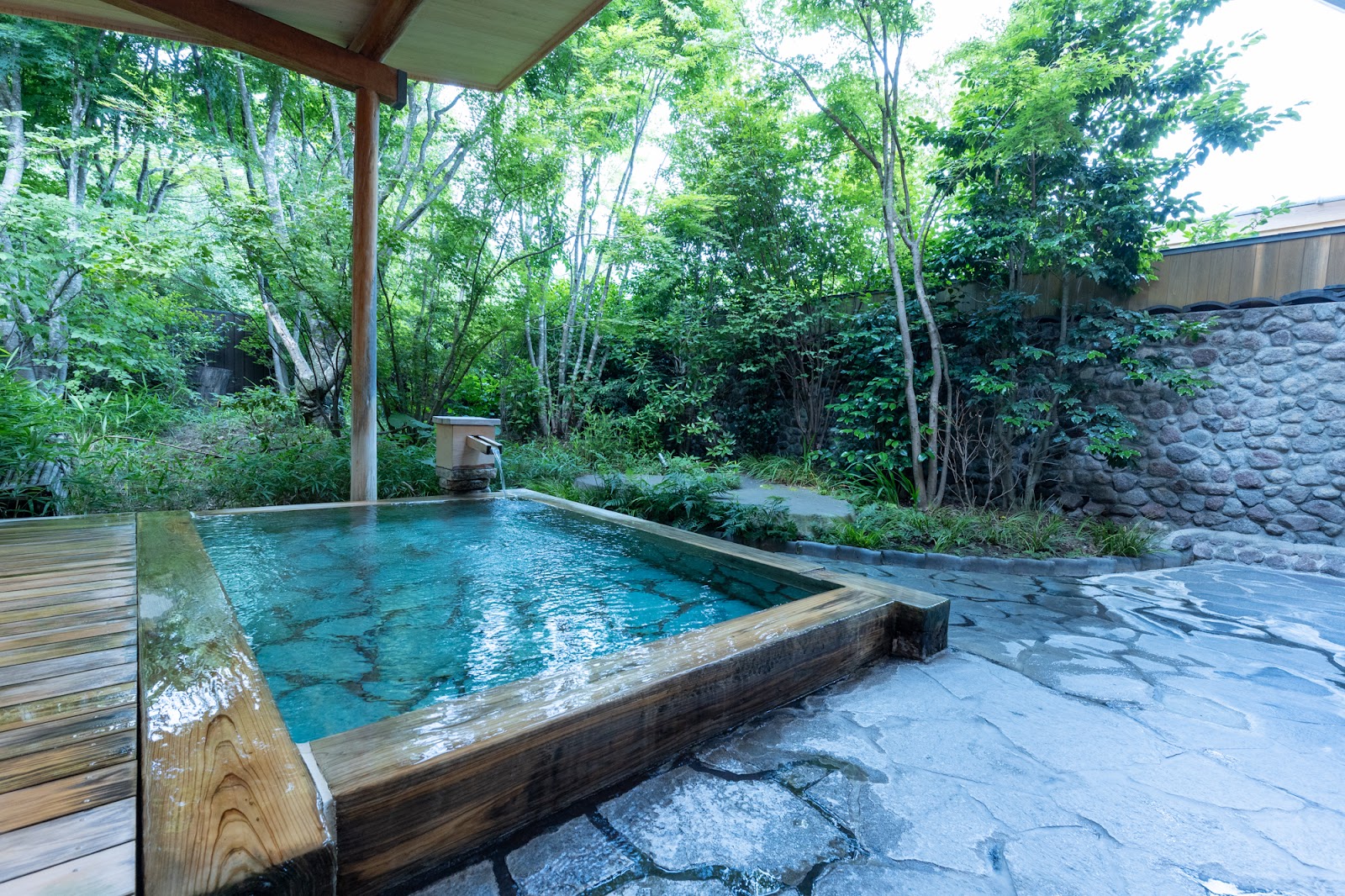
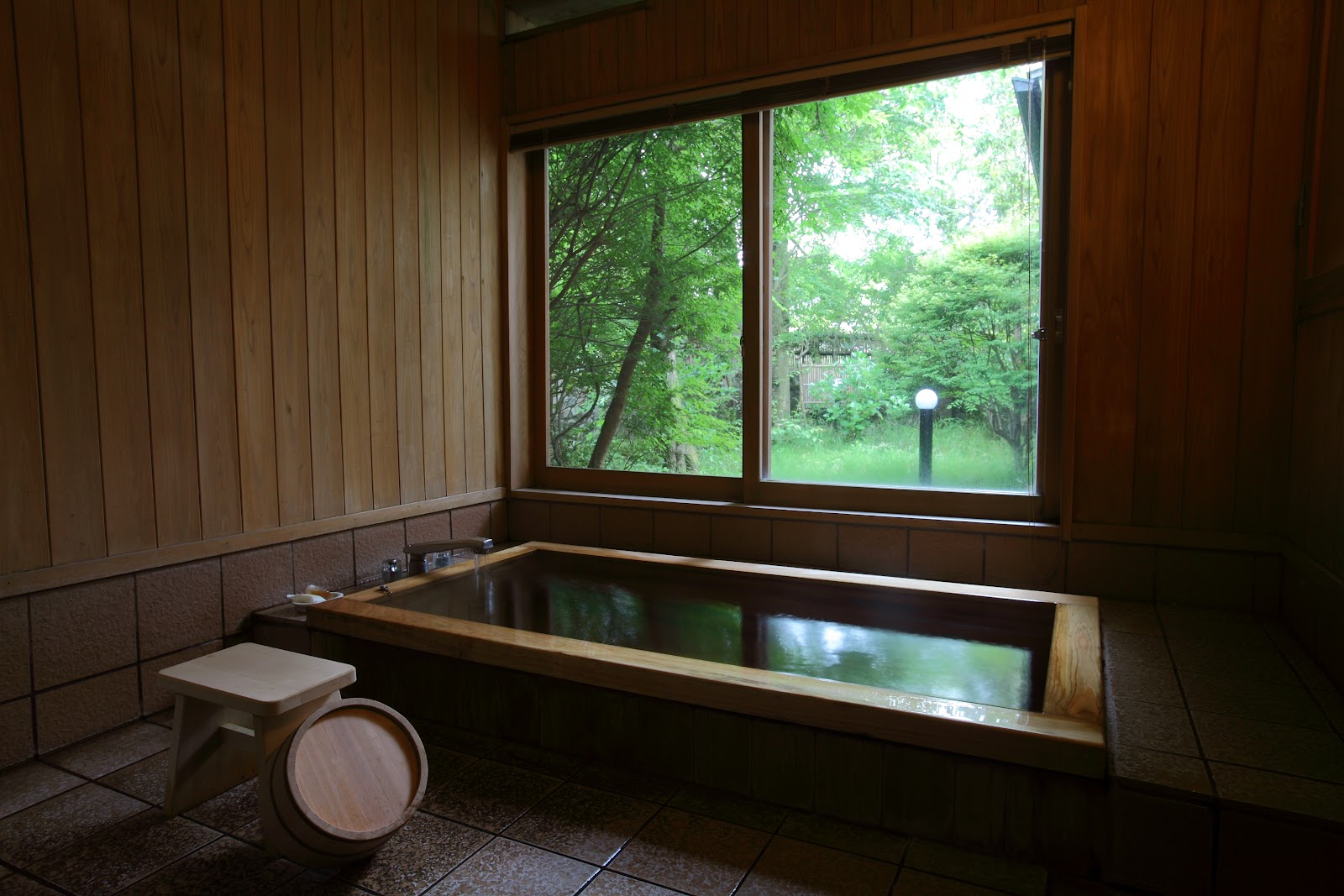
Book one of the larger rooms with the full three-part layout: a tatami sitting room, a separate bedroom with Western twin beds, and a private bathing room with a wooden tub fed by hot-spring water. Most of the 16 rooms follow this pattern, but layouts and sizes vary across the grounds, so state exactly what you want when you reserve rather than taking pot luck. One honesty note our earlier coverage got wrong: these are cedar soaking tubs inside the room, not dramatic open-air rock baths under the sky. If a true private rotenburo is your non-negotiable, confirm the specific room's bath with the ryokan before you book, or look elsewhere.
For Western travellers the room design solves the two classic ryokan anxieties at a stroke. You get real beds, so there is no futon-on-tatami surprise at 10pm, and you get a private bath, so communal bathing etiquette becomes optional rather than compulsory. With only 16 keys the gap between the plainest room and the best one is real, and the better rooms go first for the autumn foliage weeks and New Year.
You should not skip them, and practically speaking you cannot: rates are quoted per person and include kaiseki dinner and breakfast, which is the standard ryokan format and the core of the experience here. Dinner is served at the Budou-ya restaurant between 5:30pm and 7:30pm, a sequence of small seasonal courses built on Oita produce, local beef, river fish, and mountain vegetables, with some dishes finished at the table. Breakfast offers a considered Japanese spread, and a Western option with fresh juice and eggs exists for anyone flagging after several ryokan mornings.
Between meals the grounds carry you. The tea room pours coffee, tea, and the house ice cream over forest views through floor-to-ceiling glass, the adjoining Nicol's Bar opens from 5:30pm to 10pm for whisky and sake, and the Yufuin Ichi shop sells the ryokan's own jams and local craft until 6pm. The set dinner window is the one real constraint. Arrive by late afternoon or you will be eating your included kaiseki at a gallop.
Yufuin's water is a simple hot spring: clear, mild, essentially unscented, and gentle enough for long, repeated soaks, which suits the private in-room tub format perfectly. This is not the sulphurous theatre of Beppu over the hill. The pleasure is quieter, a cedar tub filled from the spring, taken before dinner and again before bed with the window open to the trees.
The town extends the bathing. Yufuin Onsen is dense with public baths a short stroll from the gate, and in cold months the valley produces its signature spectacle: morning mist rising off Kinrin Lake, best seen before the day-trip crowds arrive mid-morning. Soak at dawn, walk to the lake, and be back for breakfast. That 90 minutes is the argument for staying overnight in Yufuin rather than day-tripping like everyone else.
The classic approach is the Yufuin no Mori limited express from Hakata Station in Fukuoka, a forest-green panoramic train that reaches Yufuin in about 2 hours 14 minutes. Every seat is reserved, only a few round trips run daily, and it sells out day after day, so book the moment reservations open through JR Kyushu rather than assuming you can walk on. If the named train is full, standard limited expresses and highway buses cover the same Fukuoka-to-Yufuin corridor in a similar two to two and a half hours. Flying works too: Oita Airport connects to Yufuin by bus in about 55 minutes for 1,550 yen. From JR Yufuin Station the ryokan is about a 10-minute walk or a 3-minute taxi, close enough that arrival is painless, set back enough that the town's daytime bustle never reaches the trees.
Check-in opens at 2pm, checkout runs to a generous noon, and dinner is served 5:30pm to 7:30pm only. Meals are bundled into the per-person rate, so a late arrival wastes real money. Plan Yufuin as a deliberate overnight with an early train in and a slow morning out, not a squeezed stopover.
Published rates run from 41,950 to 72,750 yen per person per night, including dinner, breakfast, tax, and service. Note the unit: per person, not per room. Two people should budget from roughly 84,000 yen a night, around 550 US dollars at recent exchange rates, before drinks, and more for the top rooms and peak dates. Judged as room-plus-two-serious-meals for two, it is fair value; judged against a Western room-only rate it looks misleadingly expensive, so compare like with like.
Booking involves more friction than a global luxury brand, and pretending otherwise would not help you. The official site at tamanoyu.co.jp takes direct reservations but its English pages are functional rather than slick. The reliable English-language routes are the Japanese platforms Rakuten Travel and Ikyu, both of which list Tamanoyu with live availability, and the curated booking site Tablet Hotels also carries it. You will not consistently find it on the big Western booking engines. Reserve three to six months ahead for weekends, and further out for the November foliage weeks and New Year, when 16 rooms evaporate.
Recent guest reviews cluster around the same three compliments: the garden and its quiet, the meals, and the comfort of soaking privately in spring water at any hour. The ryokan holds a 4.4 out of 5 rating from around 170 Tripadvisor reviews, strong for a property this traditional and this expensive. The recurring cautions are practical. English is limited, though reviewers describe the staff as gracious anyway. Yufuin's streets fill with day-trippers from late morning to late afternoon, so the town outside the gate is livelier than the brochure mist suggests. And at least one longtime repeat guest has questioned whether the kitchen's consistency has slipped from its historic peak, a minority view worth knowing about at these prices, though most recent diners still call dinner the highlight of their Kyushu trip.
Five things should give the wrong traveller pause. First, the format is fixed: set kaiseki menus, a two-hour dinner window, and meals priced into the rate, so night owls and grazers will chafe. Second, the in-room baths are indoor cedar tubs, beautiful but modest, not the photogenic private rotenburo some competitors advertise. Third, there is no spa menu, pool, gym, or evening programming of any kind; the ryokan offers trees, water, and food, full stop. Fourth, the journey is a genuine commitment, with no bullet train to Yufuin and the best train chronically sold out. Fifth, per-person pricing with two guests lands the real nightly spend well north of what the headline figure implies. None of these are flaws exactly. They are the terms of the deal, and Tamanoyu is only ever disappointing to people who did not read them.
Late October into November is the peak: maples turning over the paths, cold mornings, reliable mist, and the toughest booking window of the year. Winter is the connoisseur's choice, with clear cold air, steaming tubs, thinner crowds, and Kyushu's mild climate sparing you the heavy snow of northern Japan. Spring brings fresh leaf and easier availability, the smart compromise for a first visit. Summer is green but humid, and the town fills with domestic holidaymakers. Because the bathing happens privately in your room, bad weather changes the mood rather than the plan; there is no wrong season here, only a more expensive one.
Tamanoyu sits at #38 between two Aman resorts, and the contrast is the point. Its rank neighbours buy their serenity with architecture and staffing budgets; Tamanoyu inherited its serenity from monks and simply declined to ruin it. Choose by temperament, not by score.
| Hotel | Rank | Best for | Character |
|---|---|---|---|
| Amanpuri, Phuket | #37 | Polished beach privacy | The original Aman: pavilions, pool, full resort facilities |
| Yufuin Tamanoyu, Kyushu | #38 | Onsen ritual, food, silence | 16-room former Zen retreat in its own wood, meals included |
| Amantaka, Luang Prabang | #39 | Heritage and temple towns | Colonial-era compound beside a UNESCO old quarter |
| Aman Kyoto, Japan | Also in Japan | Ryokan ethos, resort execution | Forest garden resort with onsen bathing and Aman service |
Within Japan the sharpest comparison is Aman Kyoto, which pursues the same forest-and-water idea with triple the polish and triple the bill, or Aman Tokyo for the urban version. Tamanoyu answers both with the one thing money struggles to replicate: it is the original article, not an homage. For more stays built around bathing and stillness, see our Top 50 wellness hotels.
Yes. Yufuin Tamanoyu is trading normally in 2026, taking reservations through its own site at tamanoyu.co.jp and through the Japanese booking platforms Rakuten Travel and Ikyu. It remains one of the three flagship ryokan of Yufuin Onsen and features in the Japan National Tourism Organization's luxury collection.
Sixteen. The rooms are spread across roughly 2.5 acres of wooded grounds rather than stacked in one building, and most combine a tatami sitting room, a separate bedroom with Western twin beds, and a private bathing room fed by hot-spring water.
Most rooms include a private bathing room with a wooden tub fed by Yufuin's hot-spring water, so you can soak on your own schedule. These are cedar tubs inside the room rather than dramatic outdoor rock baths, and layouts vary, so confirm the specific room and bath when you reserve.
Published rates run from 41,950 to 72,750 yen per person per night, and that figure includes kaiseki dinner, breakfast, tax, and service. For two people the real starting spend is roughly 84,000 yen a night, around 550 US dollars at recent exchange rates, before drinks.
Take the Yufuin no Mori limited express from Hakata Station, about 2 hours 14 minutes to Yufuin. Every seat is reserved and the train sells out regularly, so book as soon as reservations open. Highway buses from Fukuoka and a 55-minute bus from Oita Airport are the alternatives. The ryokan is about a 10-minute walk or a 3-minute taxi from JR Yufuin Station.
Check-in opens at 2pm and checkout is a generous noon. Dinner at the Budou-ya restaurant is served between 5:30pm and 7:30pm, so plan to arrive by late afternoon. Meals are part of the rate, and skipping dinner does not meaningfully reduce the price.
It is one of the gentlest introductions to high-end ryokan culture. Most rooms have proper Western twin beds alongside the tatami sitting room, so you are not committing to a futon on the floor, and Yufuin's simple hot-spring water is mild and unscented. Expect set menus, an early dinner window, and limited English.
Late October into November for autumn colour, which is also the hardest window to book, or winter for cold, clear mornings when mist rises off Kinrin Lake a short walk away. Spring is green and calmer; summer is humid and the town is at its busiest with domestic visitors.
Sibling entries on the Top 50 World list with full editorial cases:
#37 · Amanpuri · Phuket#39 · Amantaka · Luang PrabangJapan · Aman Kyoto · KyotoJapan · Aman Tokyo · TokyoOff peak pricing, suite upgrades, and subscriber only offers, flagged only when the value is real.