The strongest 2-week Europe hotel itinerary runs London to Paris to Florence to Rome by rail: four nights at Claridge's, three at Le Bristol, three at Four Seasons Firenze and four at Hotel de Russie. Eurostar takes 2 hours 15 minutes, Frecciarossa handles Italy, and May, June or September beat the summer peaks.
Affiliate disclosure: bookings made through links on this page may earn us a commission at no extra cost to you. Hotels are chosen editorially, never for payment. Every hotel below was checked against current listings in July 2026.
Most two-week Europe plans fail the same way: too many cities, too many airports, hotels chosen last. This route works the other way round. Fly into London, fly home from Rome, and let the train do the rest. Four anchor hotels, each verified open and bookable for 2026, carry the trip.
Why London, Paris, Florence and Rome, in that order?
Because the geography runs downhill in one line. Eurostar drops you into central Paris in 2 hours 15 minutes, high-speed rail carries you over the Alps into Italy, and Florence to Rome is a 90-minute hop. Nothing backtracks, every station is central, and the pace steps down to a slow Roman finish.
| Days | City | Hotel | Arrive by | Fastest leg | Entry rate |
|---|---|---|---|---|---|
| 1 to 4 | London (4 nights) | Claridge's | Fly into London | n/a | from about $900 |
| 5 to 7 | Paris (3 nights) | Le Bristol | Eurostar, St Pancras to Gare du Nord | 2h15 | from about $1,590 |
| 8 to 10 | Florence (3 nights) | Four Seasons Firenze | Frecciarossa via Milan, or a 2h flight | 6h50 + 1h44 | from about $900 |
| 11 to 14 | Rome (4 nights) | Hotel de Russie | Frecciarossa from Florence | about 1h30 | from about $1,700 |
Want the shortlist?
Hotel picks and subscriber only special offers, curated weekly. Free to join.
Where should you stay in each city?
One anchor hotel per city, each verified open in July 2026 and chosen because it defines its neighbourhood. Claridge's is the top pick and the reason the trip starts in London.
London: Claridge's (nights 1 to 4)
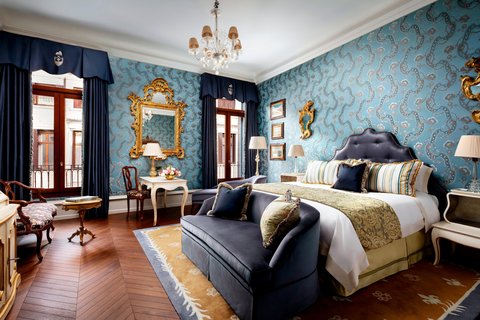
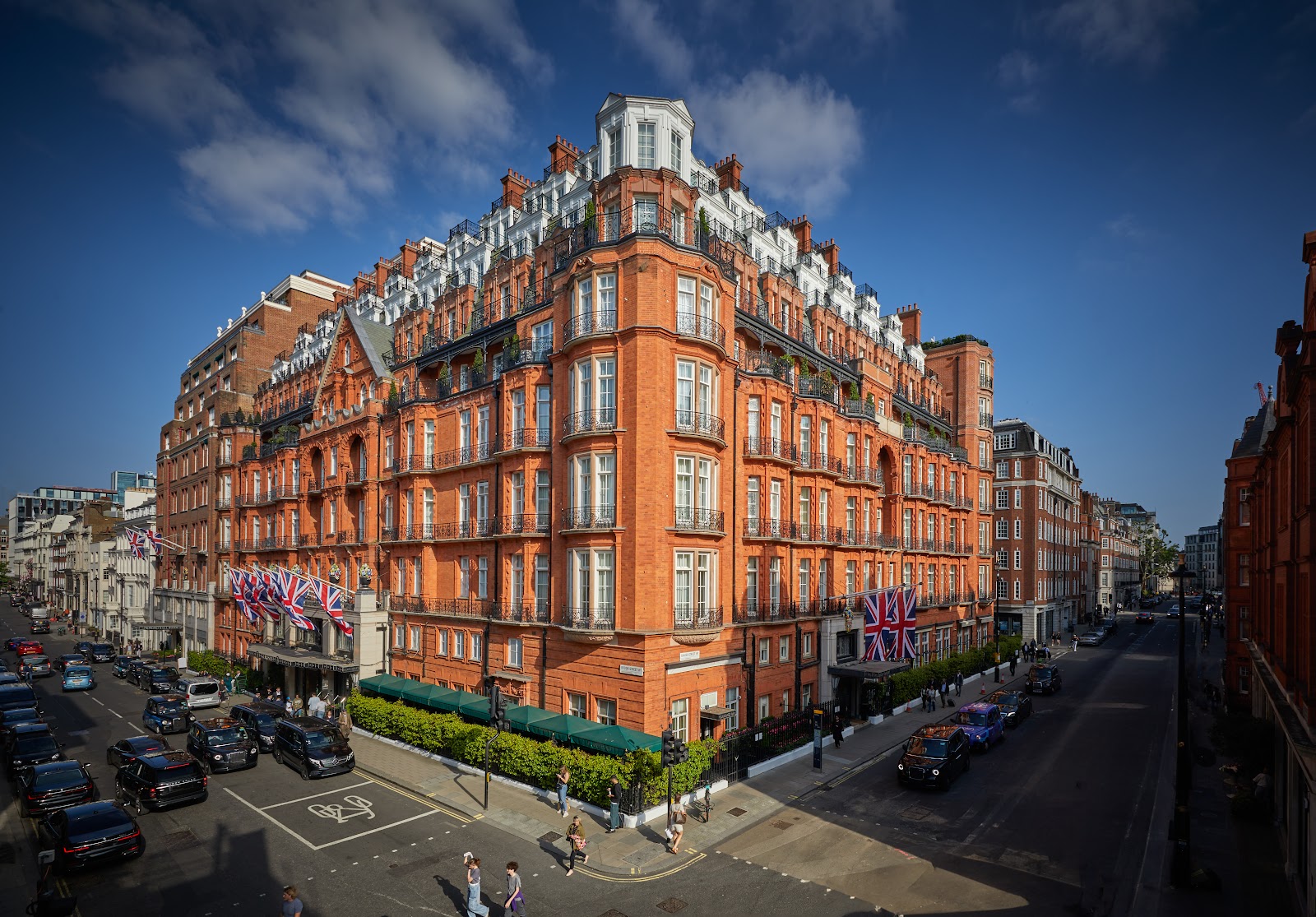
Claridge's has been the London hotel since 1856, and it earns the first four nights. The bones are Victorian, the signature is pure Art Deco, and the Foyer, lit by a Dale Chihuly glass sculpture, is where the theatre happens over afternoon tea. Claridge's Spa resets the jet lag, and Bond Street, Mayfair's galleries and Hyde Park sit within ten minutes on foot. Entry rates start around $900 a night, the lowest of the four anchors, though the Wimbledon fortnight in late June and early July pushes them sharply higher. The honest catch: the ground floor is a scene, not a sanctuary, so take a higher floor for the hush the rate implies.
Paris: Le Bristol (nights 5 to 7)

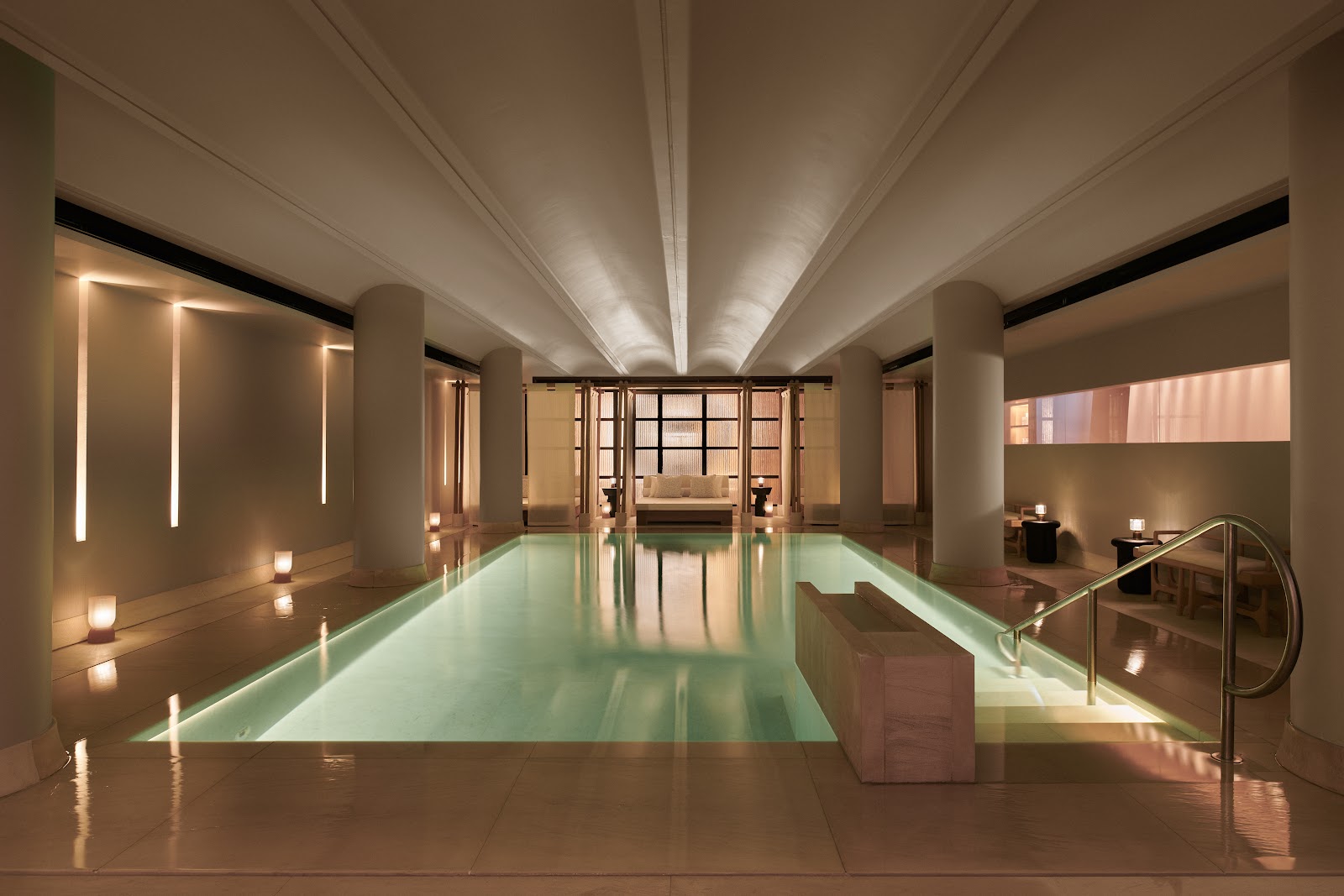
Three nights at Le Bristol put you at 112 rue du Faubourg Saint-Honore, a short walk from the Elysee Palace and the flagship end of Paris shopping. The first hotel in France to receive the official Palace distinction still behaves like it: a courtyard garden at the centre, four Michelin stars across its restaurants under chef Arnaud Faye, and an indoor rooftop pool looking out toward Montmartre and the Eiffel Tower. Eat once at Epicure or 114 Faubourg, then keep the other nights for bistros. The catch is the bill: entry rates from roughly $1,590 a night, higher still around the early-October fashion shows. Our Paris hotels guide has softer landings.
Florence: Four Seasons Hotel Firenze (nights 8 to 10)
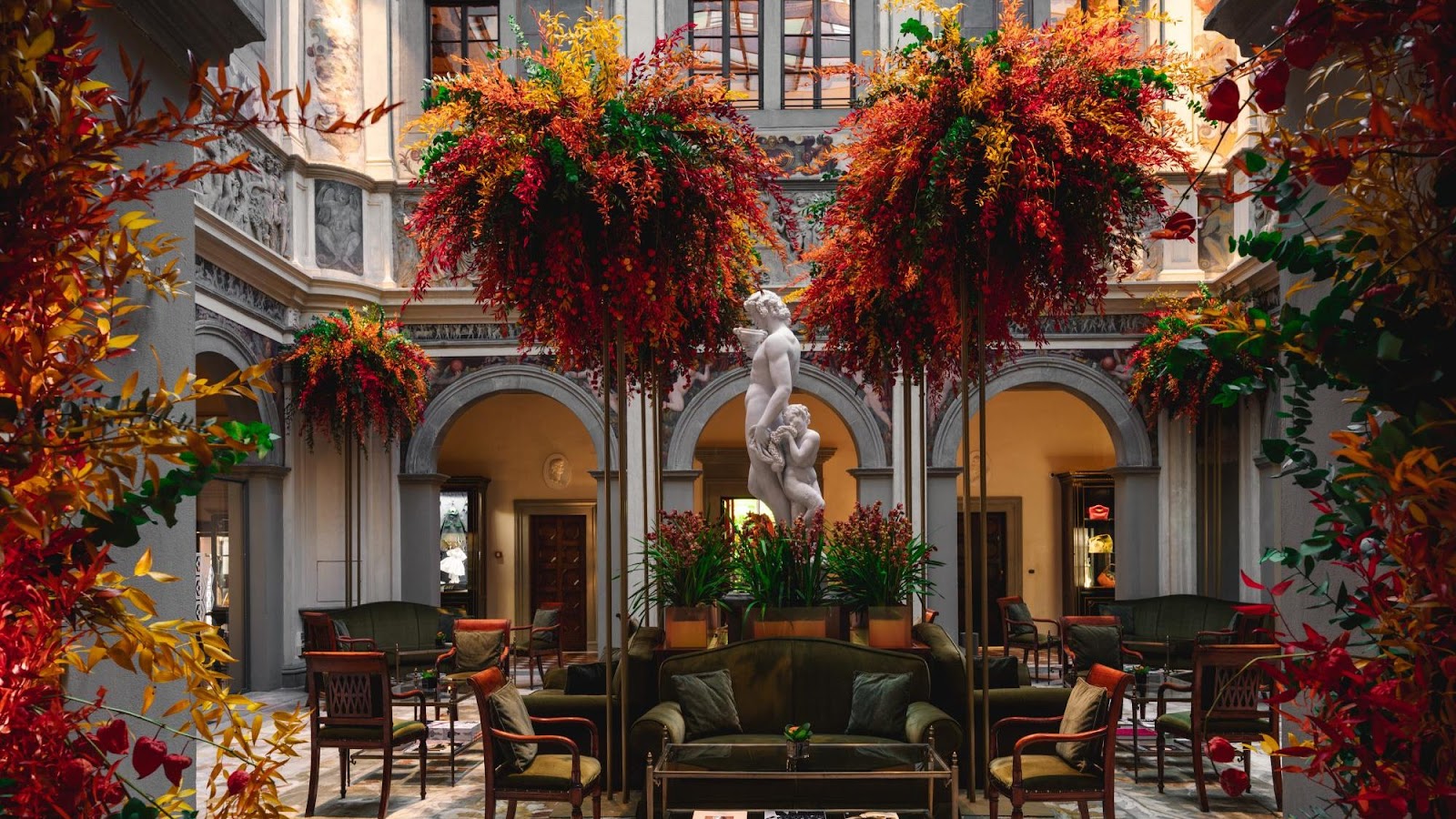
Florence gets three nights, and Four Seasons Hotel Firenze is the reason to spend them slightly away from the crush. The hotel occupies two Renaissance buildings, the 1473 Palazzo della Gherardesca and the 36-room Palazzo del Nero, wrapped around one of the largest private gardens in the city. Il Palagio holds a Michelin star, and the Duomo is roughly a 15-minute walk from the Borgo Pinti entrance. After two dense capitals, the garden is the point: breakfast under centuries-old trees resets the trip's rhythm. Entry rates around $900 make it the value play of the four anchors. The catch: you are a walk, not a stumble, from the Uffizi, and in July and August that walk happens in mid-30s Celsius heat.
Rome: Hotel de Russie (nights 11 to 14)
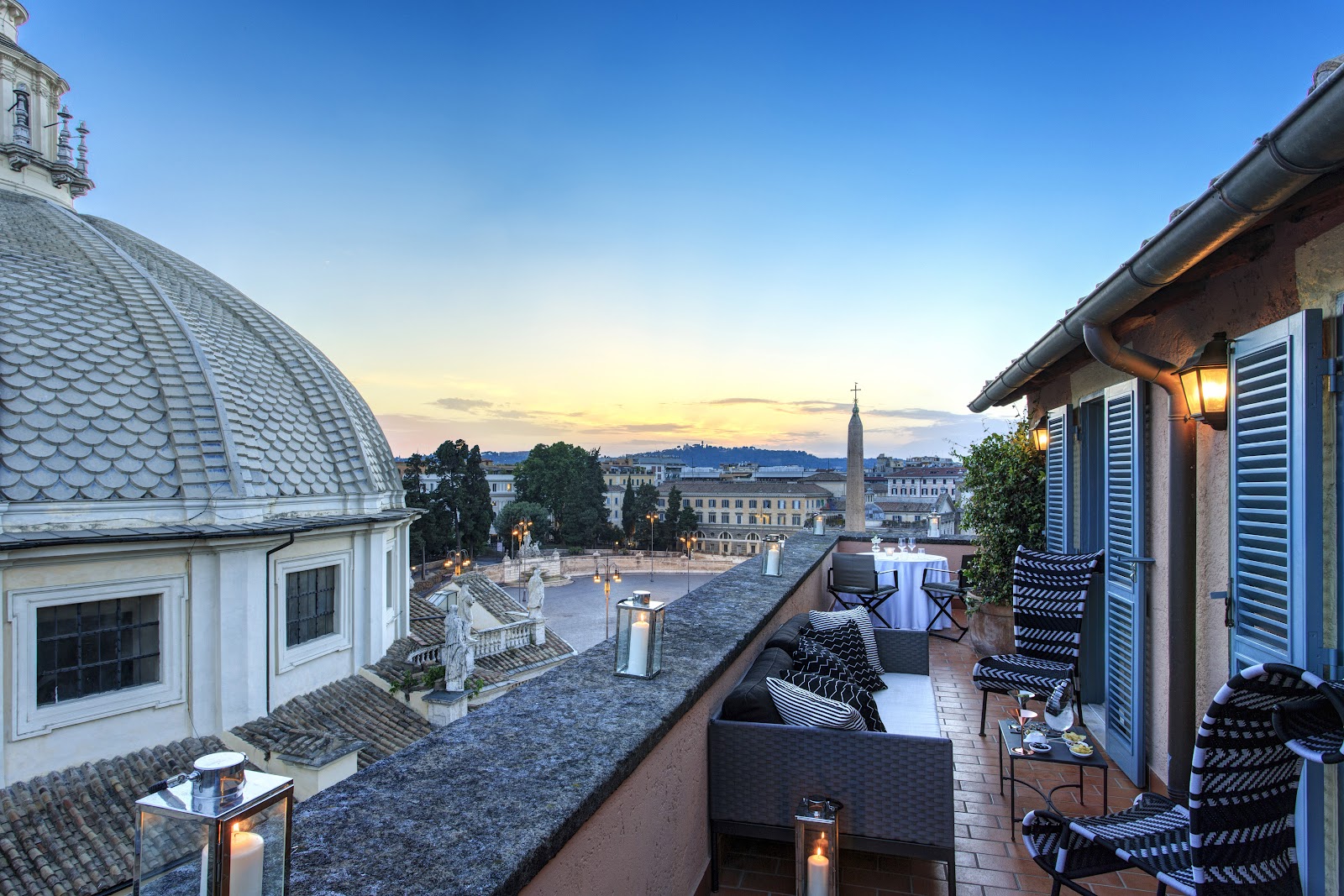
Rome closes the trip with four nights at Hotel de Russie, Rocco Forte's 120-room, 34-suite hotel at Via del Babuino 9, halfway between Piazza del Popolo and the Spanish Steps. Its Secret Garden climbs the lower Pincio in terraces first laid out by architect Giuseppe Valadier in the nineteenth century, and the Stravinskij Bar beneath them is one of the city's definitive aperitivo addresses. Book a Secret Garden room or suite: they face the greenery rather than the street and are the reason to choose this hotel over its rivals. Entry rates near $1,700 make it the priciest anchor. The catch: this is a social, central hotel whose courtyard hums into the evening; for monastic quiet, look toward the Aventine.
The Venice swap: The Gritti Palace instead of Rome
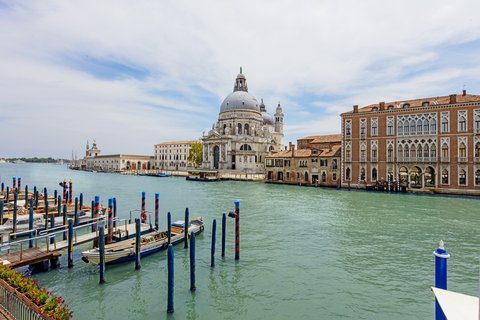
Prefer canals to ruins? Swap Rome for Venice. Direct high-speed trains run from Florence in about two hours, and the place to land is The Gritti Palace, the Gothic palazzo reshaped by the Pisani family in 1475, home of Doge Andrea Gritti from 1525 and now a Luxury Collection hotel. The Riva Lounge terrace faces Santa Maria della Salute across the Grand Canal, and Club del Doge serves Venetian classics at water level. Entry rates start around $1,080, below the de Russie; a Grand Canal view room is worth the premium. This ending suits honeymooners and slow finishers. Keep Rome if it is your first Italy trip.
How do the rail legs actually work?
Three transfers, two of them trivial. Eurostar runs London St Pancras to Paris Gare du Nord in 2 hours 15 minutes nonstop, roughly hourly, with bookings open up to 11 months ahead and standard one-way fares from about 52 pounds booked early. Formalities happen before boarding, so you step off at Gare du Nord and go.
Paris to Florence is the route's honest compromise. The direct Frecciarossa from Paris Gare de Lyon to Milano Centrale takes about 6 hours 50 minutes, with two round trips a day since service resumed in April 2025 after the long Alpine landslide closure, and advance fares from about 35 euros. From Milan, around 22 direct high-speed trains a day reach Firenze Santa Maria Novella in as little as 1 hour 44 minutes. Done as one day it is a long, scenic nine hours; the alternative is a roughly two-hour flight to Florence or Pisa. One 2026 warning: engineering work is planned on the Alpine line in September and October, so confirm schedules or fly that leg.
Florence to Rome is the easy finale: Frecciarossa and Italo cover it in roughly 90 minutes, city centre to city centre, with advance fares from 19.90 euros.
How much does this itinerary actually cost?
Budget around $18,000 for two people sharing at entry level across the 14 hotel nights, based on the lowest aggregator starting rates in July 2026: roughly $3,600 in London, $4,770 in Paris, $2,700 in Florence and $6,800 in Rome. Treat that as the floor, not the average; base categories on prime June dates can run 30 to 50 percent above it. The trains are a rounding error by comparison: booked when sales open, all the rail legs together usually total under 150 euros a person. Spend the difference on one marquee table per city, booked four to six weeks out.
When should you go, and when should you book?
Mid-May to late June and all of September are the windows to aim for: long days, open terraces, and heat Florence and Rome can still serve comfortably. July and August cost you twice, in crowds at the Uffizi and the Vatican and in temperatures pushing the mid-30s Celsius. Late October trades warmth for the year's best rates.
Book in this order. Hotels first, four to six months out, because entry categories at these four sell through earliest. Eurostar next, since sales open up to 11 months ahead and the cheapest buckets vanish first. Trenitalia last, roughly six months out, where the 19.90-euro fares reward early buyers.
The honest trade-offs of this route
Four things should be priced in before you commit. First, the Paris to Florence day is genuinely long at around nine hours by rail; take it as a scenic set piece with a first-class seat and a packed lunch, or fly it and bank the day. Second, 2026 adds friction: Entry-Exit System biometrics can slow Eurostar check-in, and autumn engineering work can disrupt the Paris to Milan trains. Third, summer is the worst version of this trip; its whole appeal is terraces and walking, and both wilt in an Italian August. Fourth, four cities means three packing days. If that grates, cut Florence and go three cities deep instead.
Five rules that make this itinerary work
- Book hotels four to six months out and trains the day sales open; the cheap buckets in both vanish first.
- Give the arrival city four nights, because jet lag quietly eats the first one.
- Treat the Alpine rail day as part of the trip or fly it; the half-measure is the only bad option.
- Never schedule a museum or a marquee dinner on a transfer day.
- End on four nights, not two. The finish is the part of the trip you remember.
For the framework behind these choices, see our multi-destination itinerary pillar. Compare the 2-week Japan hotel itinerary or the 10-day Southeast Asia route, or go deeper in our best European city hotels guide.
Frequently asked questions
How many cities can you fit into a 2-week Europe trip?
Four is the ceiling, and only when the rail legs are short. This route works because two of its three transfers take under three hours. If you would rather move less, drop Florence and split its nights between Paris and Rome.
How far in advance should I book the trains?
Eurostar opens bookings up to 11 months ahead, with standard one-way fares from about 52 pounds; the cheapest buckets sell first. Trenitalia opens Frecciarossa sales roughly six months out, with advance fares from 19.90 euros between Florence and Rome. Booked at opening, the rail legs usually total under 150 euros a person.
How much should I budget for hotels on this itinerary?
Around 18,000 dollars for two people sharing across 14 nights, based on the lowest aggregator starting rates in July 2026: about 900 dollars a night at Claridge's, 1,590 at Le Bristol, 900 at Four Seasons Firenze and 1,700 at Hotel de Russie. Those are entry categories on off-peak dates, so treat it as the floor.
When is the best time to take this trip?
Mid-May to late June and all of September. You get long days, open terraces and temperatures Florence and Rome can serve comfortably. July and August bring mid-30s Celsius heat in Italy, the densest crowds and peak hotel rates. Late October trades some warmth for the best value of the year.
Can I end the trip in Venice instead of Rome?
Yes, and the swap is easy: direct high-speed trains run from Florence to Venice in about two hours. Book The Gritti Palace, the Grand Canal palazzo that became the residence of Doge Andrea Gritti in 1525, with starting rates around 1,080 dollars a night. Venice suits couples who want a slow finish; first-timers should keep Rome.
Will the EU Entry-Exit System affect this trip in 2026?
At the margins. The EU's biometric Entry-Exit System rolls out through 2026, and non-EU passport holders register fingerprints and a photo at the external border. Allow extra time for Eurostar check-in at St Pancras; after entering the Schengen area in Paris, no further border checks apply on this route.