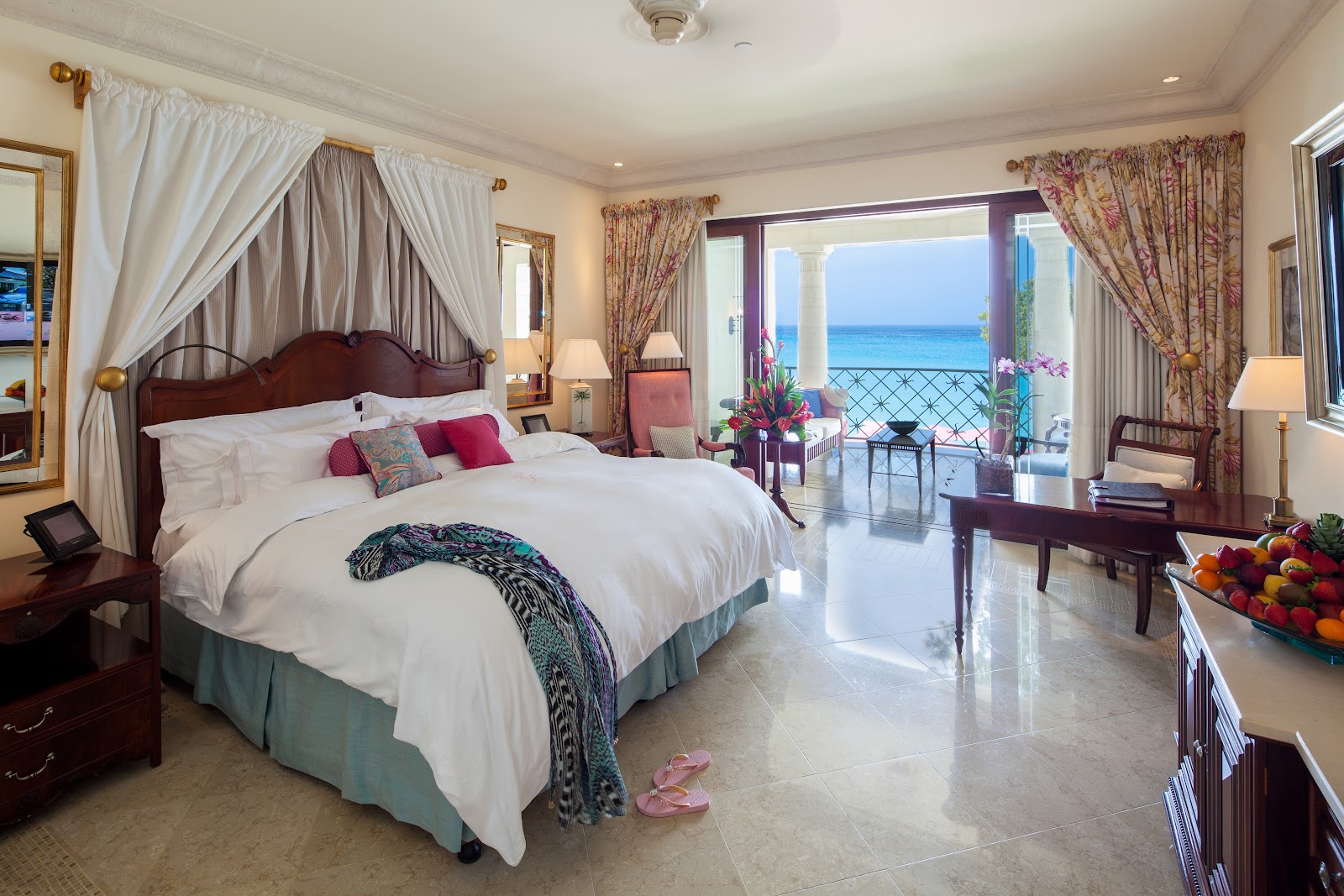
The short answer: A wedding room block reserves a batch of rooms at one rate so guests book together, with a cutoff near 30 days out and an attrition clause that decides your liability. Prefer a courtesy block if numbers are soft. For a block-friendly property that houses the whole party, Terranea Resort is our all-round pick.
Choosing a wedding hotel for your guests is a logistics problem wearing a romantic costume. The ceremony and the flowers get the attention, but the thing that quietly makes or breaks the weekend is the room block: the batch of rooms you set aside so 40 or 100 out-of-town guests land in the same place, at a fair rate, with one link to book. Done well, it runs itself. Done carelessly, it leaves you personally liable for rooms nobody slept in. This guide explains how blocks actually work in 2026, the terms worth negotiating, the traps in the fine print, and three verified hotels that handle the guest side without drama.
Affiliate disclosure: when you book through links on this page we may earn a commission at no extra cost to you. Our rankings are editorial and never paid for.
Planning a wedding weekend?
Hotel picks and subscriber only special offers, curated weekly. Free to join.
How does a wedding hotel room block actually work?
A room block is a set of rooms a hotel holds at an agreed rate so your guests can book together instead of scattering across town at random prices. You agree the rate and the number of rooms with the hotel's group sales office, and the hotel gives you a personalized booking link or a group code. Guests reserve into the block themselves, which keeps you out of the middle of everyone's travel plans. The whole thing runs on two dates and one clause.
The first date is when the block opens for booking, usually as soon as you sign. The second is the cutoff date, commonly about 30 days before the wedding, after which any rooms nobody has claimed release back to the hotel's general inventory and the group rate may lapse. The clause that decides your financial exposure is the attrition clause, and it is the single most important line in the contract. It sets how many of the blocked rooms you are responsible for filling, and what you owe if guests do not book enough of them.

Courtesy vs guaranteed block: which should you sign?
Sign a courtesy block if your headcount is soft, and a guaranteed block only if your numbers are firm and large enough to earn real concessions. The two structures differ on one thing that matters more than any other: who pays for empty rooms. A courtesy block carries no financial liability, so unbooked rooms just release after the cutoff and you owe nothing. A guaranteed block, sometimes called a contracted block, requires you to fill a set share of the rooms, and it bills you for the shortfall if guests do not.
On a guaranteed block, the attrition target is commonly set at 80 to 90 percent of the rooms. If you contract 20 rooms at a 90 percent target and only 16 book, you are liable for the two-room gap between the 18 you promised and the 16 that filled. That is real money on a peak-season rate, which is why couples with uncertain lists should default to a courtesy block or split a large reservation into two smaller ones. The trade-off is leverage: a guaranteed block is what unlocks the better rate, the comp rooms and the shuttle, because the hotel is getting a commitment in return.
| Block term | Courtesy block | Guaranteed (contracted) block |
|---|---|---|
| Financial liability | None; unbooked rooms release | You owe for the shortfall on unfilled rooms |
| Attrition clause | No attrition | Typically 80 to 90 percent pickup required |
| Cutoff date | About 30 days out | About 30 days out, sometimes earlier for peak dates |
| Rate and concessions | Held rate, fewer extras | Firmer rate, comp rooms, upgrades, shuttle |
| Typical minimum | Small and informal | Often around 10 rooms and up |
| Best for | Uncertain or modest guest lists | Confident, larger guest lists |
Terms vary by hotel and season. Always read the signed contract, since the numbers above are the common defaults, not a rule.
What can you negotiate, and what is a comp room ratio?
The bigger and firmer your block, the more the hotel expects to give back, and the concessions are often worth more than the headline rate. The one to understand first is the comp room ratio: a standard group concession where the hotel provides one complimentary room for a set number of paid rooms. One free room per 40 paid is the common industry baseline, and larger blocks can push it to 1 per 35 or 1 per 30. Most couples apply that comp toward their own wedding-night suite, which turns a routine concession into the nicest room in the house at no cost.
Beyond the comp ratio, the items worth asking for split into three groups. Money savers: breakfast folded into the guest rate, waived resort or facility fees on blocked rooms, and complimentary parking. Flexibility: a later cutoff, attrition tied to actual pickup rather than the full block, and name changes on the rooming list up to 48 or 72 hours out. Experience: a welcome reception, a shuttle for guests between the hotel and the venue, and a suite upgrade for the couple or the planner. Get every one of these written into the contract. Verbal promises evaporate the moment the salesperson who made them moves to another property.
Which hotels handle wedding blocks well?
The honest requirement for a guest block is unglamorous: enough rooms of the right kind, in one place, run by a group team that has done this a hundred times. A 20-room boutique cannot house 90 guests however lovely it is, so the properties below are chosen because they can genuinely absorb a block and coordinate the group side. They span price tiers, from an approachable oceanfront resort to a Caribbean grande dame, and all three were open and operating in 2026.
| Hotel | Location | Rooms | Best for |
|---|---|---|---|
| Terranea Resort | Rancho Palos Verdes, California | 582 accommodations | All-round block capacity, coastal setting |
| The Breakers | Palm Beach, Florida | 534 rooms, 72 suites | Large guest lists, grand ballrooms |
| Sandy Lane | St James, Barbados | 112 rooms and suites | Ultra-luxury destination weddings |
Terranea Resort, California (all-round pick)
Our first call for a mainland wedding weekend. Terranea sits on a 102-acre bluff on the Palos Verdes Peninsula, about 40 minutes south of Los Angeles International, with 582 total accommodations: 326 guest rooms, 34 suites, 50 ocean-view casitas, 32 villas and 20 bungalows. That range is the point. A block here can put the immediate family in casitas, the wider party in guest rooms, and the couple in a suite through the comp ratio, all on one property with ceremony lawns above the Pacific. The scale means a 100-room block sits comfortably inside the resort rather than swallowing it, and the dedicated weddings team coordinates the group booking and transport in-house.
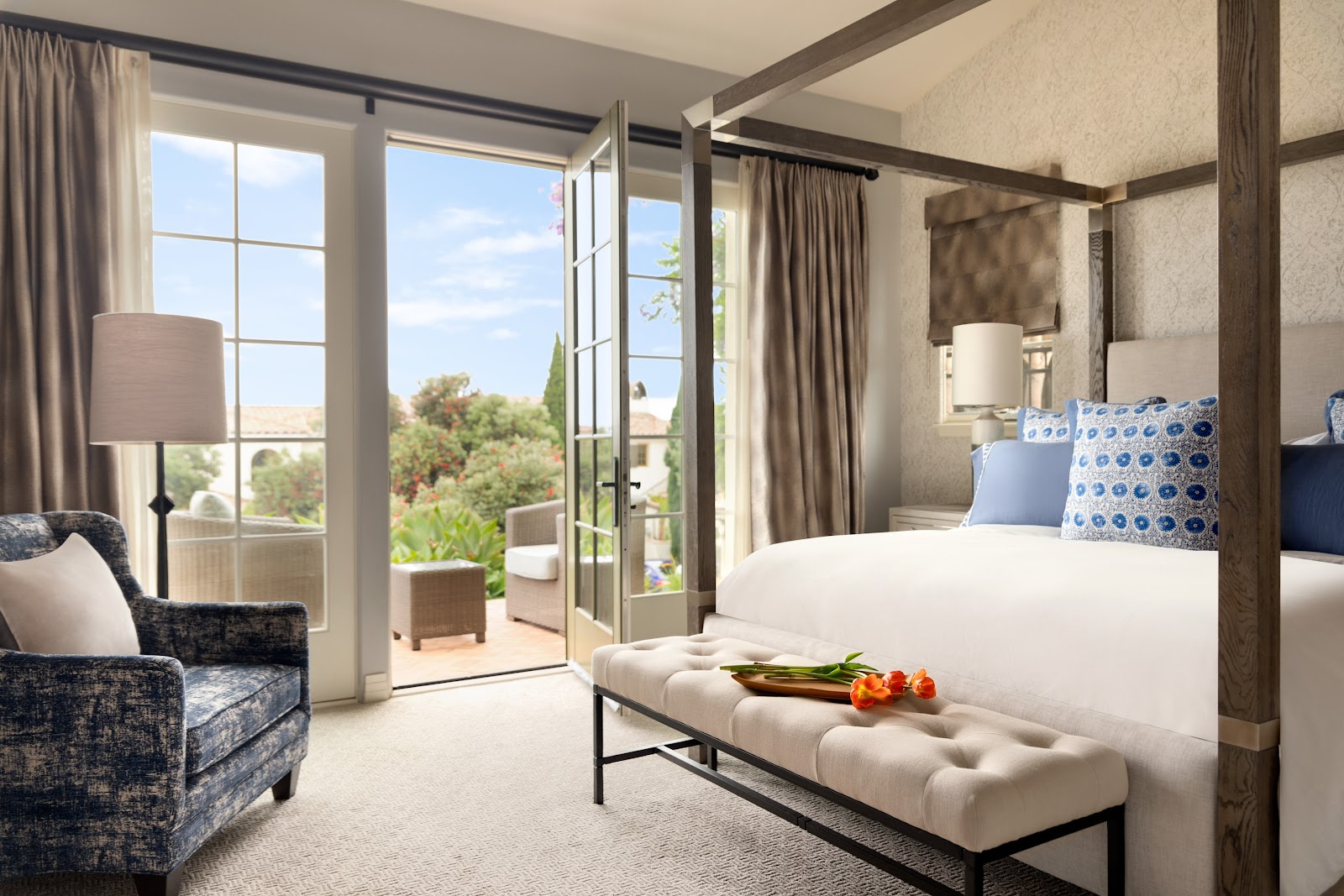
Book: a casita cluster for the immediate family and a guest-room block for everyone else. Best for: California weekends, mixed-age guest lists, blocks up to roughly 100 rooms. The catch: the property is spread out across the bluff, so plan the walking distances and shuttle timings between rooms, ceremony and reception.
The Breakers, Palm Beach (large guest lists)
When the guest list runs long, inventory wins, and The Breakers has it. The Italian Renaissance landmark holds 534 guest rooms including 72 suites across 140 oceanfront acres, with more than 80,000 square feet of event space and over 80 venues from ballrooms to ocean lawns. Its events team runs weddings from 50 guests up to a grand affair for 400, which means the room block and the reception live under one roof and one coordinator. For a big family wedding where most guests stay on site, that single-property scale removes the hardest logistics: no cross-town shuttles, no scattered rooming lists, no rate-shopping across three hotels.

Book: a block across the main building, with the couple in a suite or the boutique Flagler Club. Best for: guest lists of 150 to 400, formal ballroom weddings, on-site everything. The catch: it is a busy resort with its own guests and conventions, so lock your key event spaces and the block across all your dates before you sign.
Sandy Lane, Barbados (ultra-luxury destination)
For a destination wedding at the top of the market, Sandy Lane is the Caribbean benchmark. The coral-stone resort on the west coast of Barbados holds 96 rooms, 16 suites and a five-bedroom villa along a calm beach at Holetown, a scale that suits a smaller, high-touch guest list rather than a 300-person crowd. What it does exceptionally is the full-service destination side: airport transfers, welcome events, group dining and beach or lawn ceremonies handled by a team that runs these weekly. A near-total block here effectively gives you the run of one of the Caribbean's most storied resorts.

Book: an Orchid or Ocean room block, with the couple in a suite or the villa. Best for: destination weddings of 40 to 100 guests, service-first couples, budgets at the top tier. The catch: at 112 keys the property fills fast for peak winter dates, so a large block needs to be reserved a year or more ahead.
Booking for a sports team, not a wedding?
The room-block mechanics overlap, but the priorities differ around dining, recovery and security. Our team-travel guide covers the rest.
See the sports team guide →How do the chain wedding-block programs compare?
If your guests are price-sensitive or the wedding is somewhere without a single dominant resort, the big hotel groups run self-service block programs that do most of the work for you. These are the practical value option, and they were live on the brands' own sites in 2026. Hilton lets you book and confirm up to 25 guest rooms online through its group tool, then generates a custom attendee website where guests reserve their own rooms; anything above 25 rooms routes to the hotel or Hilton's sales team. Marriott runs a comparable weddings and group-accommodations program across its brands, with negotiated group rates and a shareable booking link for guests.
The appeal is standardization. A brand program gives you a predictable process, a personalized link to drop into your wedding website, and loyalty points for guests who pay their own way, without negotiating each detail from scratch. The trade-off is that self-service tools carry fewer concessions than a negotiated contract, so once your block passes roughly 25 rooms, or you want comp rooms and a shuttle, it pays to speak to the hotel's group coordinator directly rather than clicking through the online form.
Honest cons: the traps in a block contract
A room block looks simple and hides sharp edges, and knowing them is what separates a smooth weekend from a bill you did not expect.
- The attrition clause. A guaranteed block can invoice you for rooms guests never booked. If your list is anything short of certain, a courtesy block or attrition tied to actual pickup protects you from paying for empty rooms.
- Food-and-beverage minimums. The reception contract often carries a spending floor that can dwarf whatever you saved on the rooms. Read the room block and the event minimum together, not separately.
- The cutoff trap. Guests who miss the roughly 30-day cutoff lose the rate and may find the block sold out. Publish the date everywhere and chase stragglers a week early, because rooms released back to the hotel are hard to claw back in season.
- Fees on discounted rooms. Resort fees, service charges and parking can quietly apply on top of your negotiated rate. Confirm what is and is not included before you sign, or the block rate is not the rate.
- A modest discount. The block rate is frequently only a little below the public rate, and a promotion can beat it. The value of a block is logistics and availability, so tell guests to compare both rather than assume the block always wins.
None of this means a block is a bad idea. It means the contract deserves the same scrutiny as the venue, and the same coordination discipline that underpins group travel bookings and large-group buyouts, where the room block and private space also make or break the trip.
Five rules for a wedding room block
Get these right and the rest tends to follow.
- Read the attrition clause first, and prefer a courtesy block unless your numbers are firm.
- Block for 50 to 80 percent of expected out-of-town guests, not the whole invite list.
- Negotiate the comp room ratio in writing and apply it to the couple's suite.
- Publish the cutoff date everywhere and chase guests a week before it.
- Read the room block and the event minimum together, since one can wipe out the savings of the other.
Wedding room blocks: frequently asked questions
How does a wedding hotel room block work?
You reserve a set of rooms at an agreed rate so your guests can book together in one place. Guests reserve into the block directly, usually through a personalized group link, until a cutoff that is commonly about 30 days before the wedding. After the cutoff, unbooked rooms release back to general inventory. The line that matters most is the attrition clause, which decides whether you owe money for rooms that go unfilled.
What is the difference between a courtesy block and a guaranteed block?
A courtesy block holds rooms with no financial liability; unbooked rooms simply release after the cutoff and you owe nothing. A guaranteed or contracted block requires you to fill a set share of the rooms, commonly 80 to 90 percent, and bills you for the shortfall if guests do not book enough. Courtesy blocks suit uncertain headcounts, while guaranteed blocks unlock better rates and concessions.
When is the wedding room block cutoff date?
The standard cutoff is about 30 days before check-in, though some hotels set it earlier for peak dates. After the cutoff, unreserved rooms return to general availability and the group rate may lapse. Tell guests the exact date in writing and push them to book a week before it, because rooms released early are hard to recover in a busy season.
How many rooms should I block for a wedding?
Block enough for roughly 50 to 80 percent of your expected out-of-town guests, since not everyone books the block and some stay elsewhere. If your numbers are uncertain, favor a courtesy block or split the reservation into two smaller blocks so you are not exposed to attrition on rooms that may never fill.
What is a comp room ratio and can I negotiate one?
A comp room ratio is a standard group concession where the hotel gives one complimentary room for every set number of paid rooms. One free room per 40 paid is the common baseline, and larger blocks can push it to 1 per 35 or 1 per 30. Most couples apply the comp to the wedding-night suite. Get the ratio written into the contract rather than promised verbally.
Is a wedding room block cheaper than booking direct?
Not always. The negotiated block rate is often only modestly below the public rate, and during a promotion the hotel's own website can occasionally beat it. The real value of a block is logistics and guaranteed availability, keeping your party in one hotel with one booking link, not the size of the discount.
Can I set up a wedding room block online myself?
For smaller blocks, yes. Hilton lets you book and confirm up to 25 guest rooms online and builds a custom attendee website where guests reserve their own rooms; larger groups contact the hotel directly. Marriott and other major brands run similar programs with personalized links. Above roughly 25 rooms, or when you want negotiated concessions, work with the hotel's group sales contact instead.
For the wider framework, see our group travel hotels pillar, compare hotels for buyouts and large groups, and plan the couple's own trip with our honeymoon hotel picks.