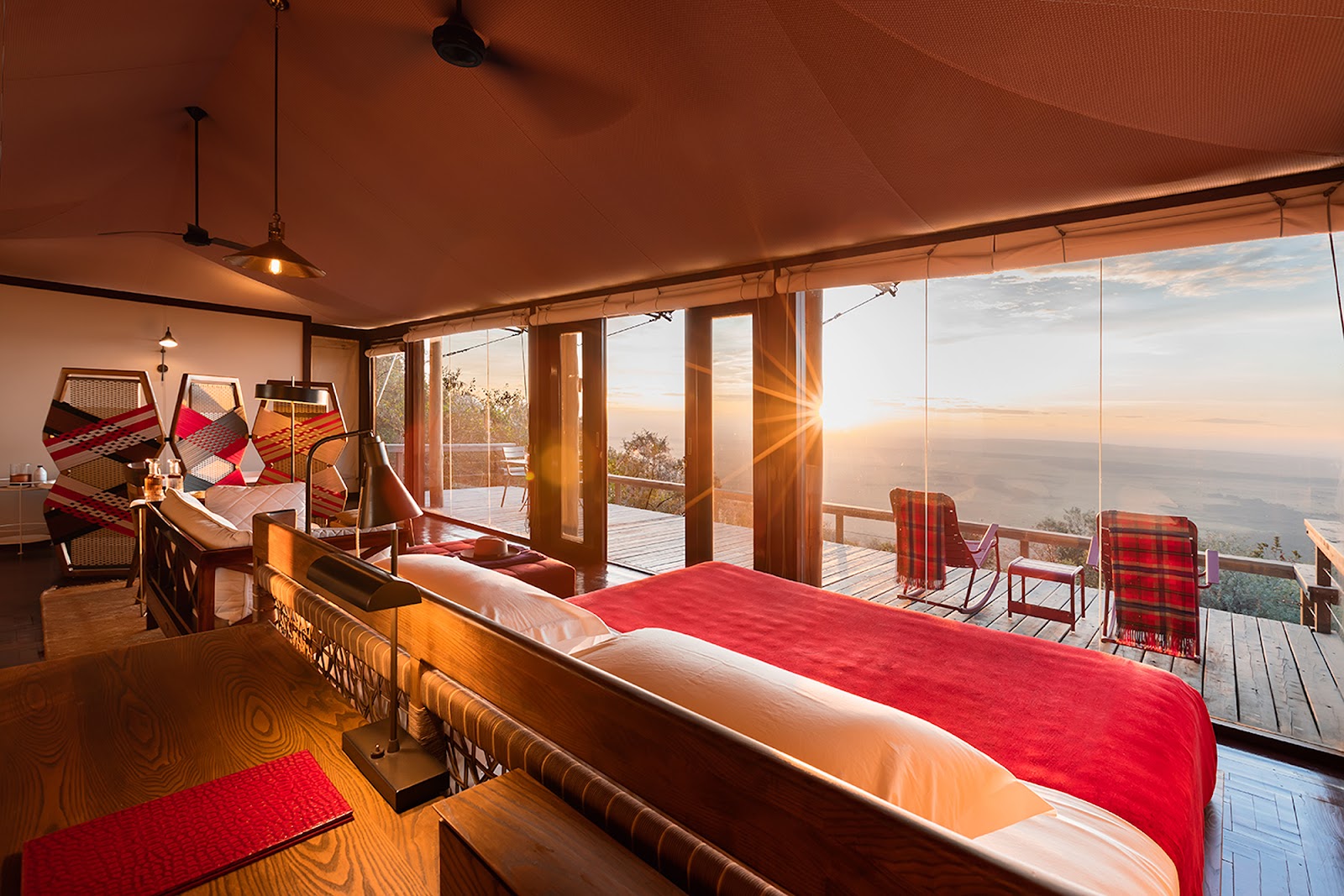
The best safari lodge in Kenya's Masai Mara for 2026 is Angama Mara, 30 glass-fronted suites on the escarpment above the Mara Triangle. Our other verified picks: Mahali Mzuri in Olare Motorogi, Cottar's 1920s Camp in Olderkesi, andBeyond Bateleur Camp and riverside Olonana Lodge. Aim for the July to October migration window, or halve your fees in green season.
Affiliate disclosure: when you book through links on this page we may earn a commission at no extra cost to you. Rankings are editorial and never paid. Every camp below was checked against its own site and current dated sources in July 2026.
The Mara punishes lazy planning. Whether your camp sits inside the National Reserve or in a private conservancy decides how crowded your sightings are, whether you can drive off-road or at night, and what fees stack on top of the room. Each write-up below states which side of that line the camp sits on, plus the real nightly maths. See our methodology.
Which Masai Mara camp is right for you?
Angama Mara wins overall for the theatre of its setting. Book Cottar's for heritage and value, Mahali Mzuri for design and exclusivity, Bateleur for polish, Olonana for the river. Rates are 2026 per person per night sharing.
| Camp | Where exactly | Tents | 2026 from | Best for |
|---|---|---|---|---|
| Angama Mara | Escarpment above the Mara Triangle | 30 suites, two camps | $1,850 | Views, photography |
| Mahali Mzuri | Olare Motorogi Conservancy | 12 tents | approx. $1,660 all-in | Design, exclusivity |
| Cottar's 1920s Camp | Olderkesi Conservancy, southeast | 11 tents | $1,146 + $116 fee | Heritage, families |
| andBeyond Bateleur Camp | Kichwa Tembo concession, western edge | 18 suites, two camps | approx. $1,245 | Service polish, first-timers |
| Olonana Lodge | Private stretch of the Mara River | 14 suites + villa | on request (A&K) | River setting, families |
Reading on the go?
We send the best of these guides, plus special offers, in one Sunday email.
How much does a Masai Mara safari really cost?
Budget the fees before the camps, because they stack fast. Since July 2024 the Masai Mara National Reserve has charged non-resident adults $200 per entry in high season (July to December) and $100 in low season (January to June), each ticket covering only 12 hours rather than a full day; children aged 9 to 17 pay $50. The conservancies charge separately: figure about $116 per adult per night at Olare Motorogi, Mara North or Naboisho, sometimes bundled into the camp rate and sometimes billed on top, so ask which.
Then add flights. Almost everyone flies from Wilson Airport in Nairobi, 45 to 60 minutes to the Mara's airstrips on Safarilink or AirKenya, with luggage capped around 15 kg per person in soft-sided bags, hand baggage included. A couple doing four peak nights can spend $1,600 on reserve fees alone. Still worth it; just walk in with your eyes open.
1. Angama Mara: the one we would book first
Angama Mara earns the top spot for the sheer drama of its position and how much is folded into the rate. Thirty glass-fronted tented suites, each over 100 square metres, split between two separate camps of 15 on the Oloololo Escarpment, roughly 300 metres above the Mara Triangle. The 2026 rate is $1,850 per person per night in standard season, rising to $2,750 from July through September and over the festive weeks, covering game drives in the Triangle, escarpment walks, meals, most drinks, laundry and childminding. Park fees are extra, as is a $20 nightly Angama Foundation contribution.
Honest cons: wildlife lives on the valley floor, so every drive starts and ends with the escarpment road (a private one, about 10 minutes to the gate), and the price is unapologetic. Each camp has two pairs of interconnecting suites; request them early. Best for photographers, big anniversaries, and anyone who wants the view to be the headline.
2. Mahali Mzuri: the conservancy design statement
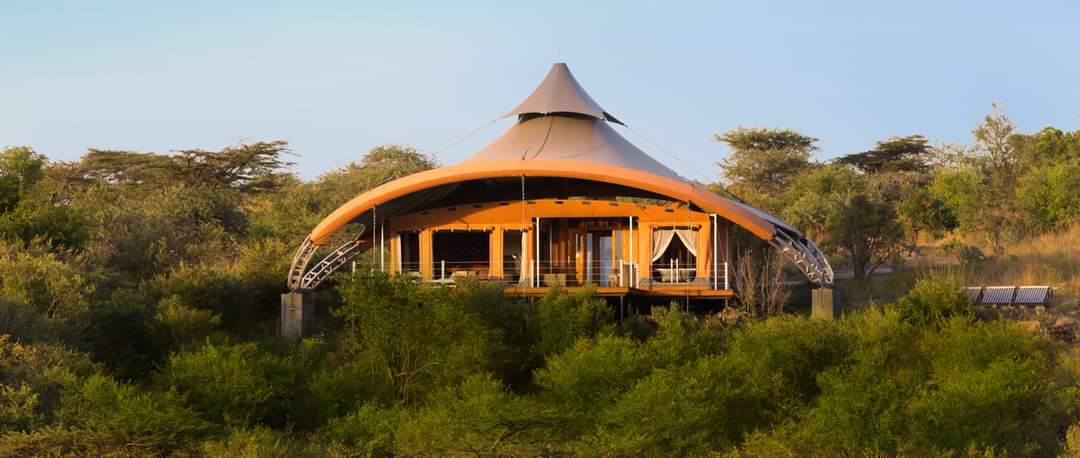
Mahali Mzuri is Richard Branson's Virgin Limited Edition camp of 12 tented suites in the Olare Motorogi Conservancy, north of the reserve, reopened in June 2025 after a full interior refurbishment built around wrap-around windows and terraces. The rate is genuinely all-inclusive: meals, drinks, conservancy access and twice-daily drives across roughly 13,500 hectares are covered, and stays of three nights or more include one reserve day pass per adult. Expect around $1,660 to $1,760 per person per night in low season and $2,600 to $2,700 in high season.
Honest cons: it is one of the Mara's priciest camps, the sculptural architecture divides traditionalists, and the river-crossing points are a long drive south, so migration chasers burn hours and a reserve fee to reach them. Best for design-led couples who value empty sightings over crossing-front seats.
3. Cottar's 1920s Camp: heritage and the best value here
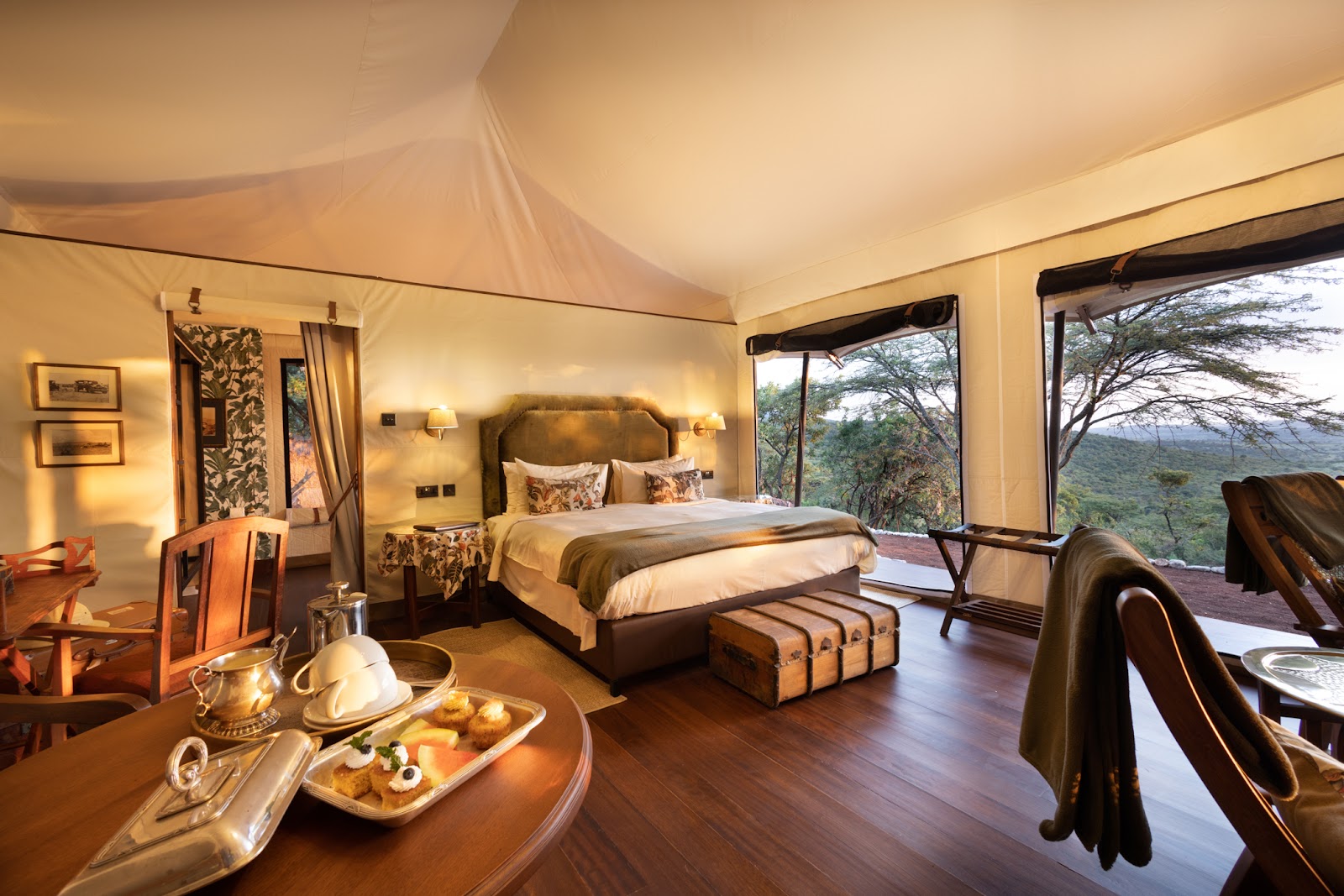
The Cottar family has run safaris in East Africa since 1919, and their 11-tent camp in the private 7,600-acre Olderkesi Conservancy on the Mara's southeastern edge is the most atmospheric stay on this list. Five luxury tents, four two-bedroom family tents and two honeymoon tents carry the period styling: campaign furniture, silver service, bush bubble baths. It is also the sharpest value. Green season runs $1,146 per person per night, high season $1,491 and peak $1,753, plus a $116 per adult nightly conservation fee that funds the Olderkesi lease. The camp has its own private airstrip.
Honest cons: the southeastern corner is remote, so flights and transfers take longer, and lantern-lit canvas romance suits travellers who do not need a hairdryer on demand. Best for traditionalists, families in the two-bedroom tents, and longer stays.
4. andBeyond Bateleur Camp: polish at the foot of the escarpment
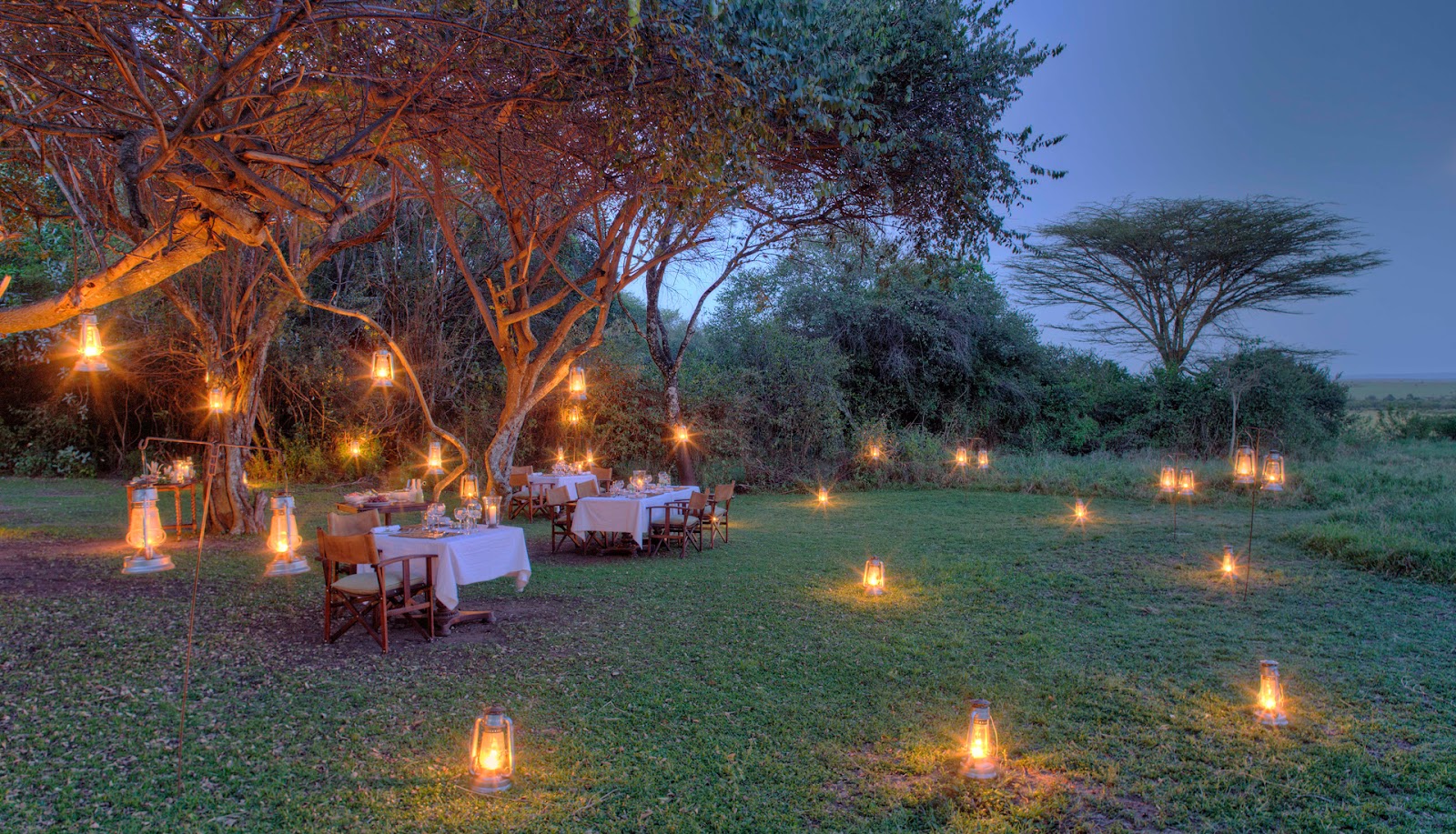
Bateleur Camp is two intimate camps of nine tented suites each on the Kichwa Tembo private concession, forest fringe at the foot of the Oloololo Escarpment on the Mara's western edge. Because the concession is private, Bateleur can run the night drives and bush walks the reserve proper prohibits, and butler service, copper bathtubs and each camp's own pool make it the most polished stay in the western Mara. Indicative 2026 rates run from about $1,245 per person per night in low season to roughly $2,675 at peak, with drives, walks and night drives included.
Honest cons: the concession is small, so most full-day driving happens inside the reserve under reserve rules and fees, and the western sector gets busy at crossing time. Children 5 and under cannot join regular game drives; ages 6 to 11 join at the manager's discretion. Best for first-timers who want andBeyond guiding, and families using North Camp's family suite.
5. Olonana Lodge, an A&K Sanctuary: the river address
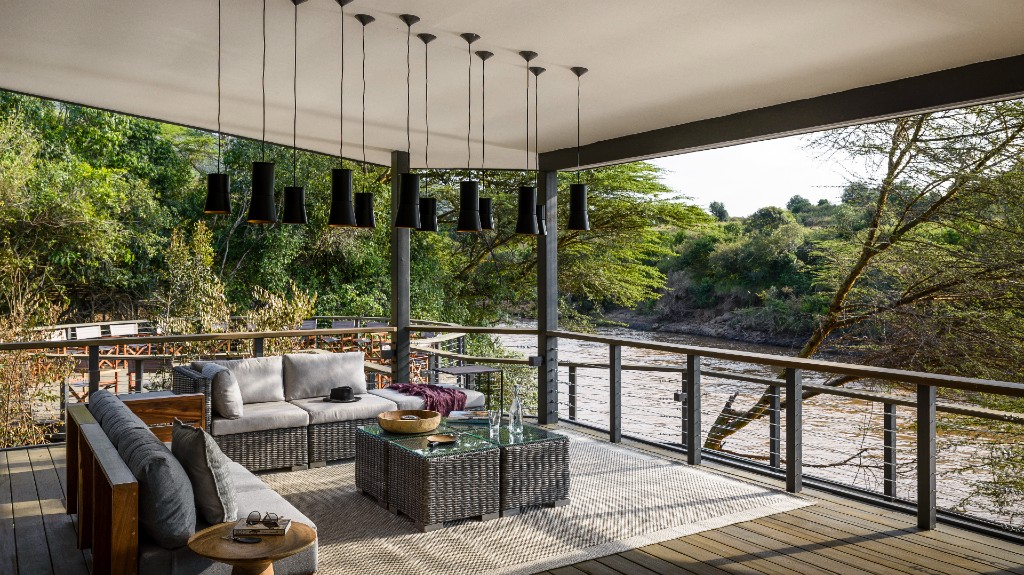
Formerly marketed as Sanctuary Olonana, this lodge now trades as Olonana Lodge, an A&K Sanctuary, under Abercrombie & Kent. The name changed; the address did not. Fourteen glass-fronted suites line a private stretch of the Mara River on the reserve's northwestern edge, with hippos audible from bed, and the two-bedroom Geoffrey Kent Suite adds a wraparound deck, private infinity pool, in-suite chef and dedicated vehicle. Rates are quoted through A&K and its partners rather than published, which suits the guided-itinerary crowd it serves.
Honest cons: the river frontage is resident-hippo theatre, not a crossing grandstand, since the famous crossing points lie deeper in the reserve; and game drives run in the reserve proper, so you share peak-season sightings and pay reserve fees each day. Best for river atmosphere, multigenerational groups and A&K loyalists.
Want a second ecosystem? Fly north to Sirikoi
Pair the Mara with the Lewa Wildlife Conservancy in northern Kenya rather than repeating the same plains. Sirikoi, a family-owned lodge of four luxury tents, a two-bedroom cottage and the exclusive-use Sirikoi House, sits in Lewa's 62,000 acres at 5,500 feet near Mount Kenya, with rhino and Grevy's zebra you will not reliably see in the Mara. Wilson Airport connects both ecosystems, so Mara plus Lewa works in seven to ten nights. For the framework, see our safari and adventure pillar.
Conservancy or reserve: which side of the line should you sleep on?
Get this one decision right and most of the rest follows. The National Reserve is the public core: any paying vehicle can enter, off-road driving and night drives are banned, and famous sightings draw queues in peak season. The conservancies, including Olare Motorogi, Mara North, Naboisho and Olderkesi, are private Maasai-owned lands bordering the reserve where only member camps may drive, vehicle numbers are capped, and off-road positioning, night drives and walks are legal.
Our rule: sleep in a conservancy for the quality of your drives, and buy a reserve ticket on the one or two days you want the crossings or the Mara Triangle. Camps deep inside the reserve buy you crossing proximity and little else the conservancies cannot beat.
When should you go, and what will the migration actually do?
Go July to October if the Great Migration is the point, and treat river crossings as a lottery ticket. The herds usually hold in the Mara across that window, but crossings depend on rain and grass, and guests sometimes wait days for twenty minutes of chaos. No honest camp guarantees one.
The rest of the calendar is underrated. January to March brings green plains, newborn wildlife and strong big-cat action; April and May carry the heaviest rain and the lowest prices. The maths favours the off season too: the reserve fee halves to $100 from January to June, and camp rates drop by a third or more, with Cottar's at $1,146 against its $1,753 peak. The Mara's famous lions and cheetahs do not migrate anywhere.
The honest cons of a Masai Mara safari
Three things brochures gloss over. First, cost stacking: a peak-season couple pays camp rate plus $200 each per reserve entry, or about $116 each per conservancy night, plus Wilson flights, tips and transfers, so the real bill often lands 20 to 30 percent above the headline rate. Second, crowding: a big August crossing inside the reserve can draw dozens of vehicles to one riverbank, which is why we push the conservancies for everything except crossing days. Third, the flying: light aircraft, 15 kg soft-bag limits, bumpy dirt airstrips and routings that shuffle with weather. Recent guest reviews praise the guiding almost universally; the recurring complaints are luggage limits and transfer timing. Pack soft and build in a buffer day.
Masai Mara safari lodge FAQ
What is the best safari lodge in the Masai Mara?
Angama Mara is our top pick for 2026. Its 30 glass-fronted tented suites sit in two camps of 15 on the Oloololo Escarpment above the Mara Triangle, with 2026 rates from $1,850 per person per night including safaris, meals and most drinks. Mahali Mzuri is the strongest conservancy alternative and Cottar's 1920s Camp the value and heritage play.
What is the difference between the Masai Mara reserve and the conservancies?
The Masai Mara National Reserve is the public core, open to any paying vehicle, with off-road driving and night drives prohibited. The conservancies such as Olare Motorogi and Olderkesi are private Maasai-owned lands bordering the reserve where only member camps may drive, so sightings are quieter and off-road positioning, night drives and walks are allowed.
How much are Masai Mara park and conservancy fees in 2026?
The reserve charges non-resident adults $200 per entry in high season (July to December) and $100 in low season (January to June), with each ticket valid for 12 hours and children aged 9 to 17 at $50. Conservancy fees run about $116 per adult per night at Olare Motorogi, Mara North and Naboisho; some camps bundle them into the rate, others bill them separately.
When can you see the Great Migration river crossings?
The herds are usually in the Mara from roughly July to October, and that window is when Mara River crossings can happen. No camp can promise one: crossings depend on rain, grass and the herds' mood, and guests sometimes wait days. Resident wildlife, including all the big cats, is strong in the Mara year round.
How do you get to the Masai Mara from Nairobi?
Fly from Wilson Airport in Nairobi. Safarilink and AirKenya run multiple daily departures to the Mara's airstrips and the flight takes roughly 45 to 60 minutes depending on routing. Luggage is limited to about 15 kg per person in soft-sided bags, hand luggage included. Driving takes five to six hours on rough roads, so almost everyone flies.
Are Masai Mara safari camps suitable for children?
Several are, with caveats. Angama Mara has interconnecting family suites and includes childminding, and Cottar's 1920s Camp has four two-bedroom family tents plus a nanny service. At andBeyond Bateleur Camp children aged 5 and under cannot join regular game drives and ages 6 to 11 join at the manager's discretion, so always confirm the child policy before booking.
Is the Masai Mara green season worth it?
Yes, if you can accept afternoon rain and no migration. From January to June the reserve fee halves to $100, and camp rates drop sharply: Cottar's 1920s Camp charges $1,146 per person in green season against $1,753 at peak. You trade river crossings for emerald landscapes, newborn wildlife, strong resident cat sightings and far fewer vehicles.
Comparing regions? Read the best Serengeti lodges in Tanzania and the best Kruger lodges in South Africa, or browse honeymoon hotels for a beach finish.