The hotels professional travel photographers return to share three traits: architecture designed around natural light, real materials that render well on camera, and an aesthetic that holds from lobby to garden. The seven below, led by Royal Mansour Marrakech and Aman Tokyo, deliver all three, plus signature spots the staff will point you to.
Disclosure: we may earn a commission when you book through links on this page, at no extra cost to you. Hotels are chosen editorially. We never accept payment for placement. See our methodology.
Reading on the go?
We send the best of these guides, plus special offers, in one Sunday email.
The seven most photogenic
Each of these earns its place for a specific, repeatable reason, not a general "it's beautiful." Here is what to shoot at each.
Aman Tokyo: Kerry Hill minimalism
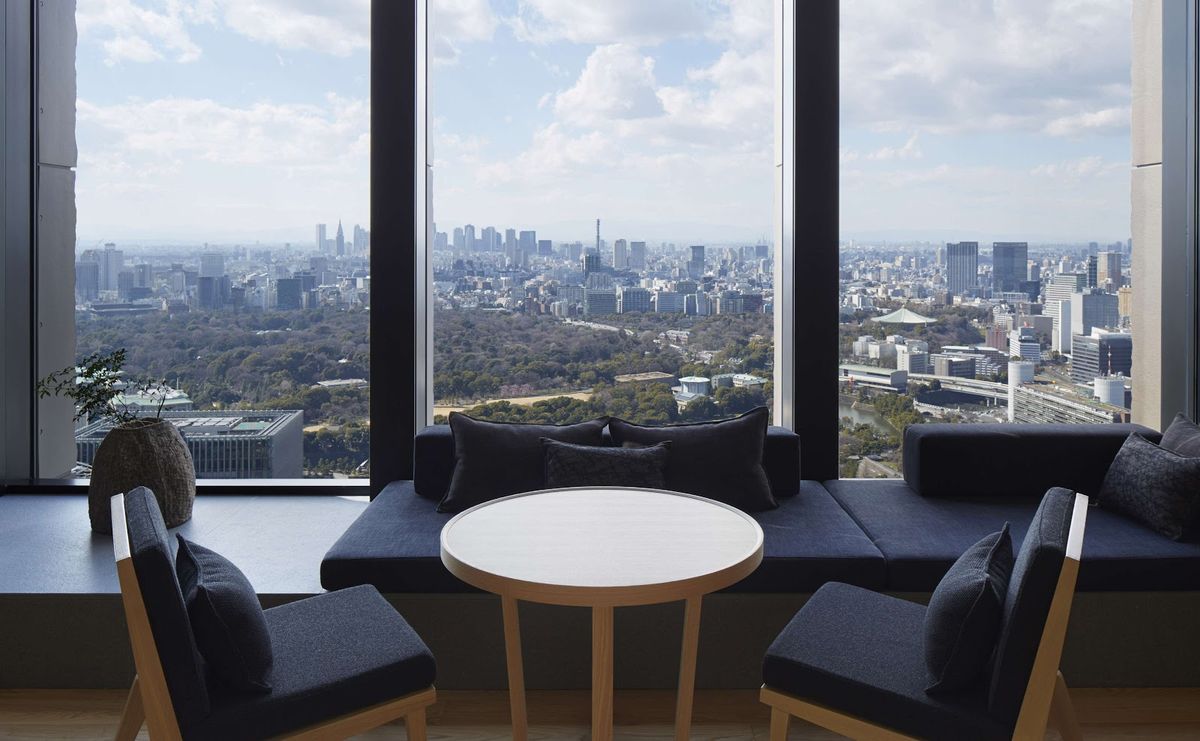
Aman Tokyo, designed by Kerry Hill Architects atop the Otemachi Tower, is the reference for minimalist interior photography: floor-to-ceiling glass, basalt floors, blackened wood, and a soaring washi-lit atrium. Shoot the lobby lantern in the blue hour and the bath suites against the city skyline in early morning.
Royal Mansour Marrakech: riad architecture
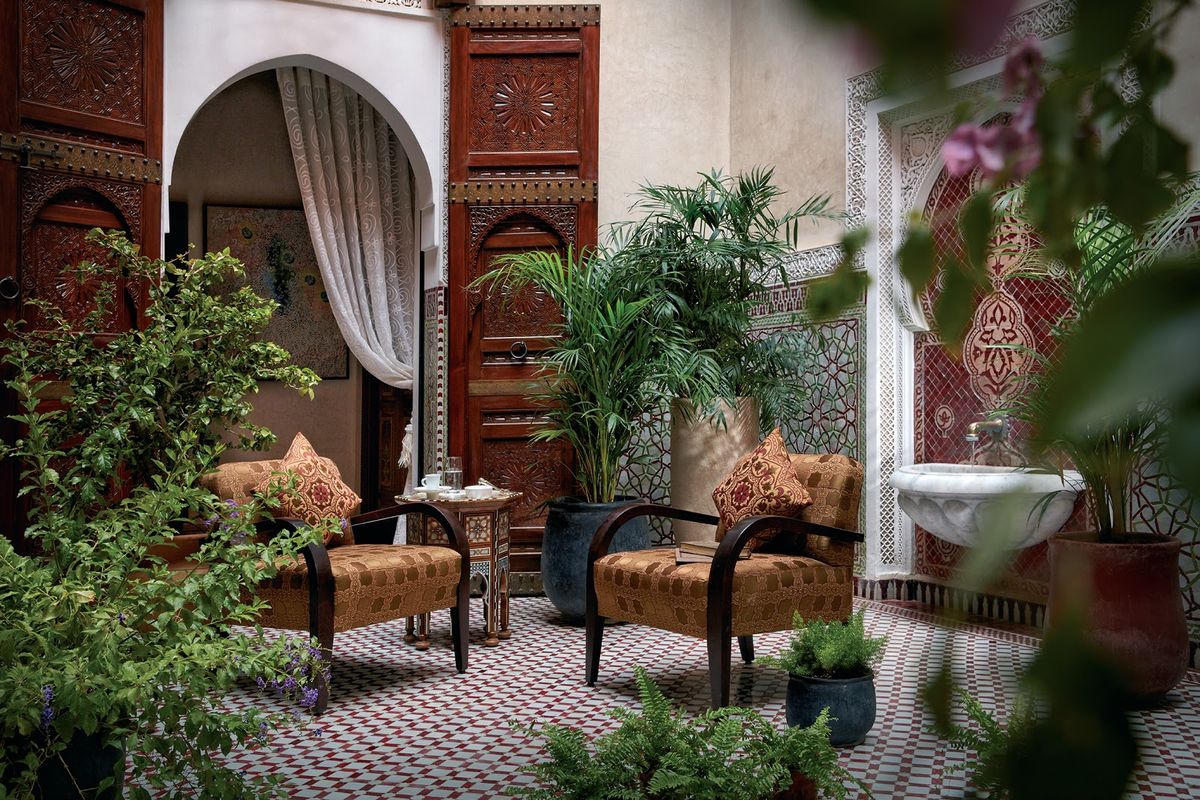
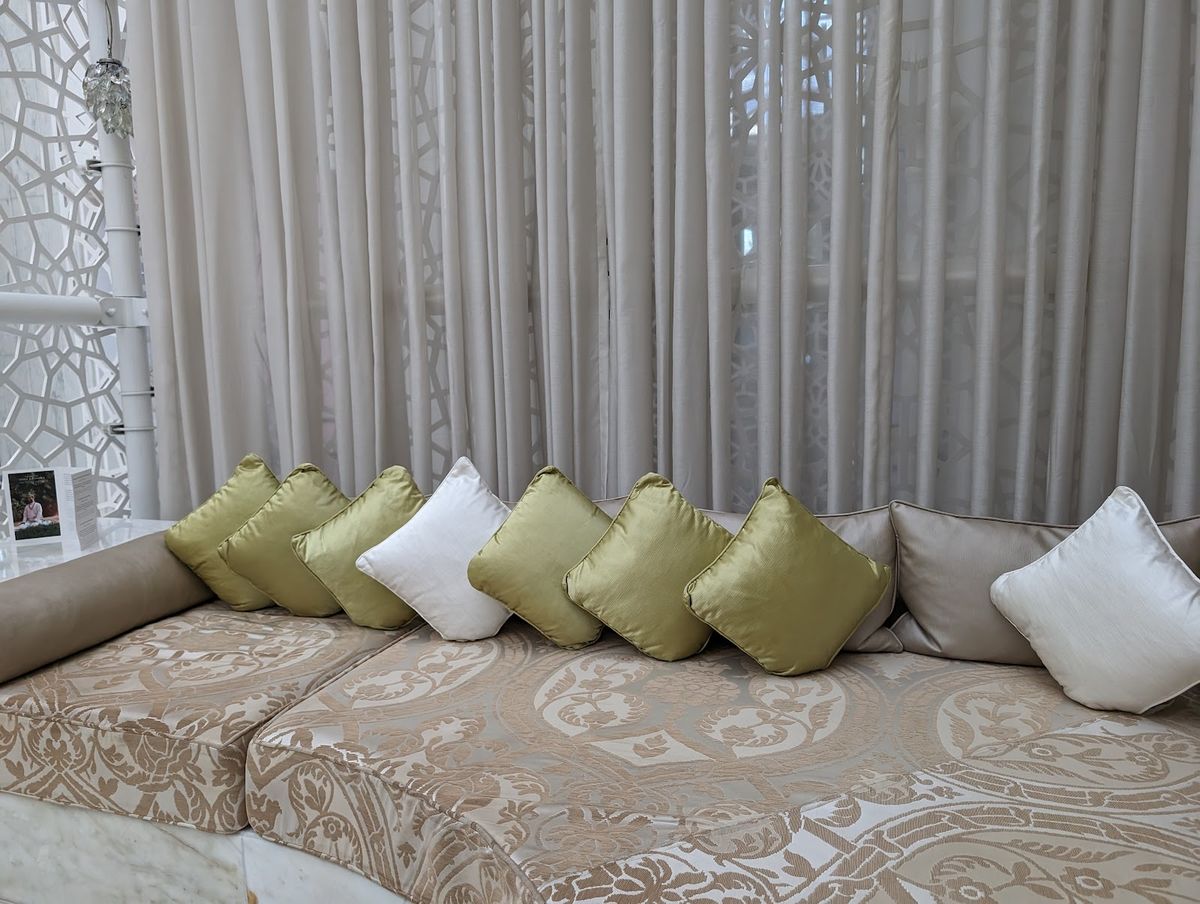
Royal Mansour Marrakech is 53 private riads linked by an underground service network, so every guest lane, tiled courtyard, and carved-cedar screen feels composed. It is the most endlessly photographable property here. Work the courtyards at midday when the fountains catch the light, and the rooftops at sunset.
Aman Venice: palazzo restoration
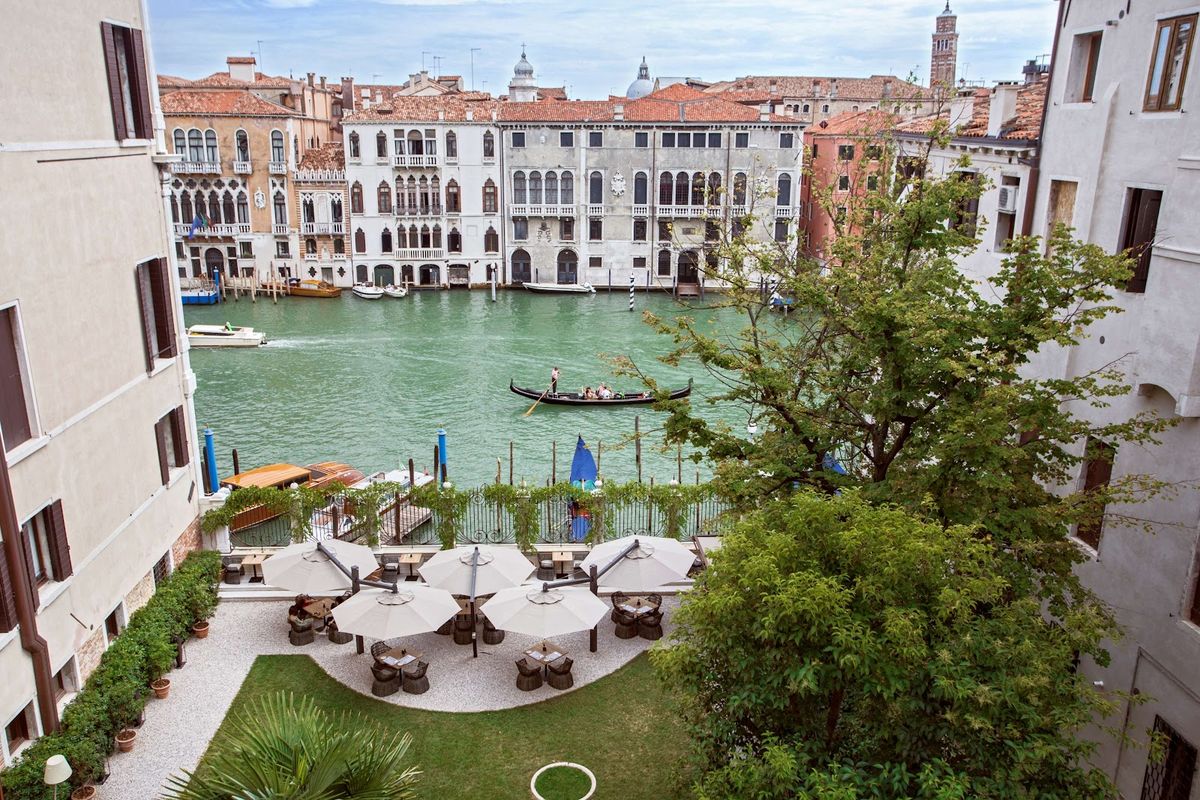
Aman Venice applies Aman's restraint to a 16th-century Grand Canal palazzo, the Palazzo Papadopoli, with frescoed piano-nobile salons and a private garden. The contrast between historic ceilings and pared-back styling is the signature frame. Shoot the canal-side rooms in soft morning light.
Hotel du Cap-Eden-Roc: Riviera classic
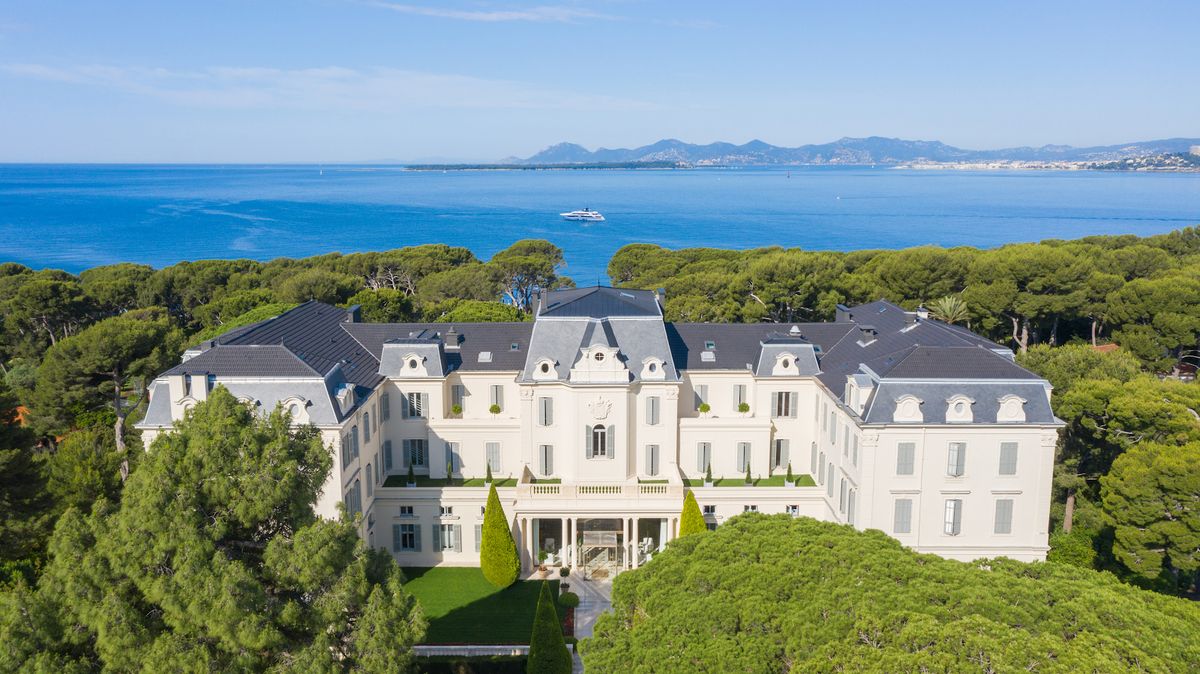
Hotel du Cap-Eden-Roc in Antibes is the Belle Epoque Riviera in one property: white facades, blue shutters, umbrella pines, and the cliffside seawater pool. The white-and-blue palette is unmistakable; shoot the pool and cabanas mid-morning when the Mediterranean is at its brightest.
Belmond Cipriani: Venetian lagoon
Belmond Hotel Cipriani, across the water on Giudecca, gives you three distinct settings within one property: the walled garden, the Olympic-sized saltwater pool, and the lagoon frontage looking back at San Marco. It is a rare hotel where you can shoot a garden, a pool, and a cityscape without leaving the grounds.
Singita Lebombo: safari modernism
Singita Lebombo, on the eastern edge of Kruger, is contemporary bush architecture: angular glass-and-steel suites that float above the N'wanetsi River, their form inspired by the eagles' nests in the cliff face, with interiors by Cecile and Boyd. It is the antithesis of thatched-lodge cliche and photographs like a design magazine.
Jumeirah Capri Palace: island elegance
Jumeirah Capri Palace in Anacapri, which reopened for the season in April 2026, is white-and-blue island elegance: terraces, bougainvillea, contemporary art, and design touches by Patricia Urquiola. Shoot the terraces and the sea-view suites in late afternoon.
Where and how to shoot each
Direct answer: for interiors and minimalism shoot Aman Tokyo and Aman Venice; for pattern and color shoot Royal Mansour and Jumeirah Capri Palace; for landscape-plus-architecture shoot Hotel du Cap, the Cipriani, and Singita. Here is the quick reference.
| Hotel | Signature frame | Best light |
|---|---|---|
| Royal Mansour | Tiled courtyards, rooftops | Midday and sunset |
| Aman Tokyo | Atrium lantern, bath and skyline | Blue hour and dawn |
| Aman Venice | Frescoed salons, canal rooms | Soft morning |
| Hotel du Cap | Seawater pool, cabanas | Mid-morning |
| Belmond Cipriani | Garden, pool, lagoon skyline | Golden hour |
| Singita Lebombo | Glass suites over the river | Dawn and dusk |
| Jumeirah Capri Palace | Terraces, bougainvillea, art | Late afternoon |
Why these work on camera
Direct answer: they were designed around light, built from real materials, and styled with continuity. Those three qualities separate a genuinely photogenic hotel from one that only looks good in the brochure.
Light
These buildings are oriented to the sun with large apertures and controlled glare, so interiors hold detail without blowing out. That is why blue hour works so well at Aman Tokyo and mid-morning at Hotel du Cap.
Materials
Stone, wood, plaster, and tile scatter light and hold texture in a way synthetic surfaces never do. Royal Mansour's zellige and Singita's raw concrete-and-canvas interiors both reward close-up work.
Continuity
The visual language carries from lobby to restaurant to room to garden, so a photo essay hangs together instead of reading as a set of unrelated spaces.
Photographer programs and access
Direct answer: ask before arrival. Some Aman, Soneva, and Belmond properties offer a photo concierge who books the right time slot and sets up the shot; a few hotels negotiate professional rates in exchange for image usage rights; and drone, rooftop, or early-lobby access is sometimes granted to serious photographers who request it in advance rather than on the day.
Shooting technique that travels
Direct answer: shoot the edges of the day, pack light enough to move, and clear your intentions with the front desk. A few habits carry across every hotel on this list.
Work dawn and blue hour
The clean, empty frames happen before service starts and after most guests have gone to dinner. Scout compositions in daylight, then return at first light for lobbies and courtyards and at blue hour for exteriors and pools, when artificial and ambient light balance. This is why Aman Tokyo's atrium and Hotel du Cap's pool reward a multi-night stay.
Travel light
A single body with a 24 to 70mm covers most interiors; add a fast 35mm for low light. Many hotels restrict tripods in restaurants and around pools, so a compact travel tripod or a beanbag rest is more practical than a full rig, and it draws less attention from other guests.
Ask, and stay discreet
Access that would be refused to a guest wandering with a tripod is often granted to a photographer who asks politely at reception and names a specific time window. Never photograph other guests without consent, and keep clear of staff during service. Courtesy is the single biggest determinant of how much of a property you actually get to shoot.
Honest trade-offs
Photographing a working luxury hotel is a negotiation, not a free shoot. Public spaces fill with other guests exactly at golden hour, so the clean lobby frame usually means shooting at dawn before service. Drone policies are tightening across Europe and near airports, so do not assume aerials. Tripods are often restricted in restaurants and pools. And these are expensive rooms to book purely for images: if the goal is a portfolio rather than a holiday, a photo-concierge property that will schedule access for you is worth more than a marginally prettier one that will not. One scheduling note for planners: Belmond Le Manoir aux Quat'Saisons, a former favorite on lists like this, closed in January 2026 for an 18-month redevelopment and is not due to reopen until summer 2027, so it is off the table for now.
Five rules for shooting hotels
- Hotels with named architects (Kerry Hill, John Pawson, Tony Chi) are reliably photogenic.
- Light is the most important variable; book the sunlit side and shoot dawn and blue hour.
- Photo-concierge programs are worth the small additional fee for scheduled access.
- Drone and tripod policies vary; confirm both at booking, not on arrival.
- Stay three or more nights so you can wait out weather for the right light.
Common questions
Which luxury hotel is the most photogenic?
For architecture, Royal Mansour Marrakech is hard to beat: 53 riads with tiled courtyards, fountains, and carved cedar. For minimalist interiors, Aman Tokyo by Kerry Hill Architects; for classic Riviera glamour, Hotel du Cap-Eden-Roc in Antibes.
What makes a hotel good for photography?
Architecture designed around natural light with controlled glare, real materials like stone, wood, plaster, and tile that render better than synthetic surfaces, and aesthetic continuity so lobby, restaurant, room, and garden share one visual language. Named architects are a reliable shortcut to all three.
Do hotels offer photographer programs?
Some do. A handful of Aman, Soneva, and Belmond properties provide a photo concierge who books the right slot and sets up the shot. A few negotiate professional rates in exchange for image usage rights, and drone or rooftop access is sometimes possible for photographers who ask in advance.
How many nights should a photographer stay?
At least three. Light is the variable you cannot control, so multiple mornings and evenings let you wait out weather and catch the property at its best hour rather than settling for a single golden hour.
For more, see our photography pillar, the iconic-architecture guide, most photogenic hotel pools, and best sunrise and sunset rooms.