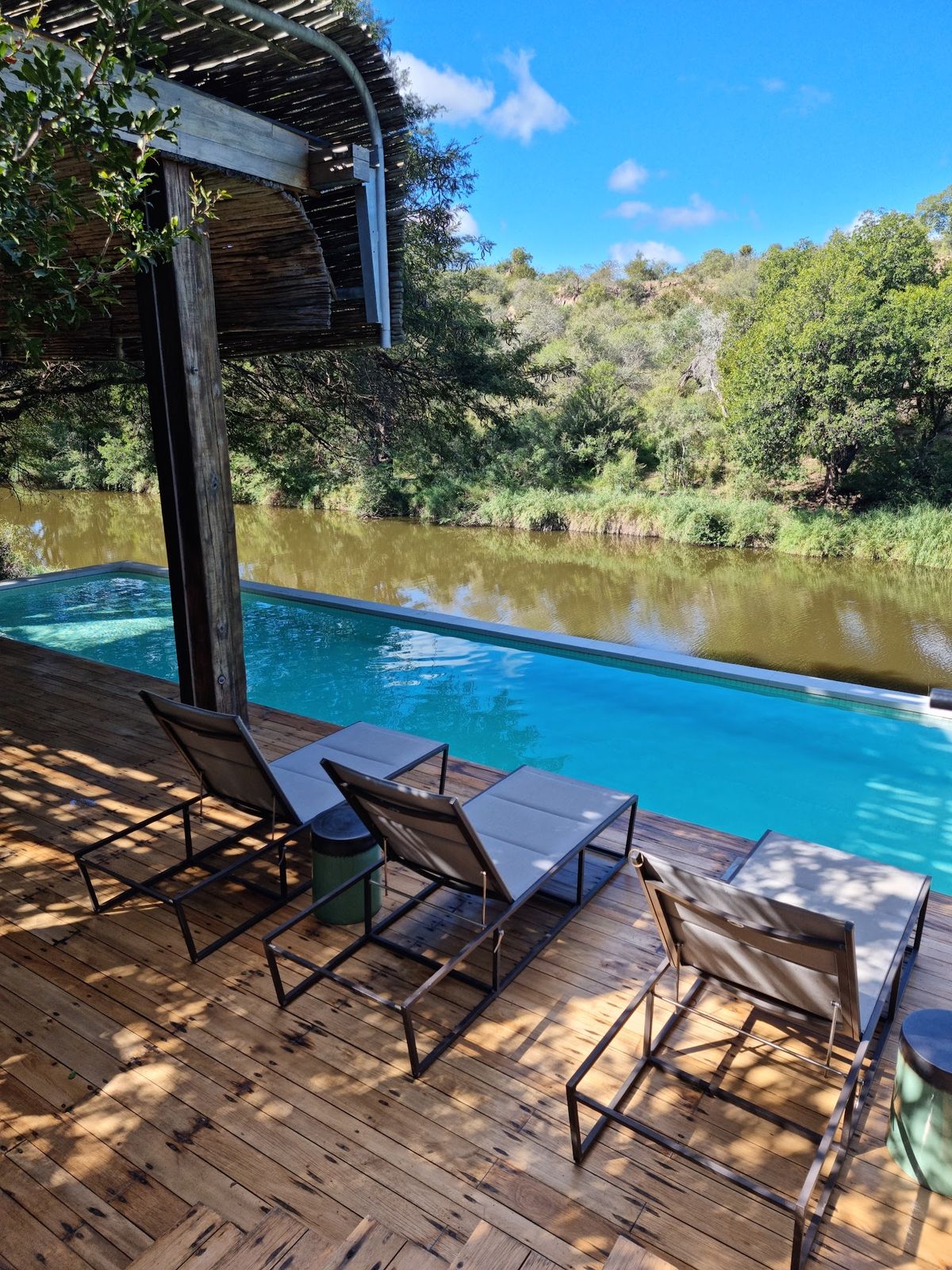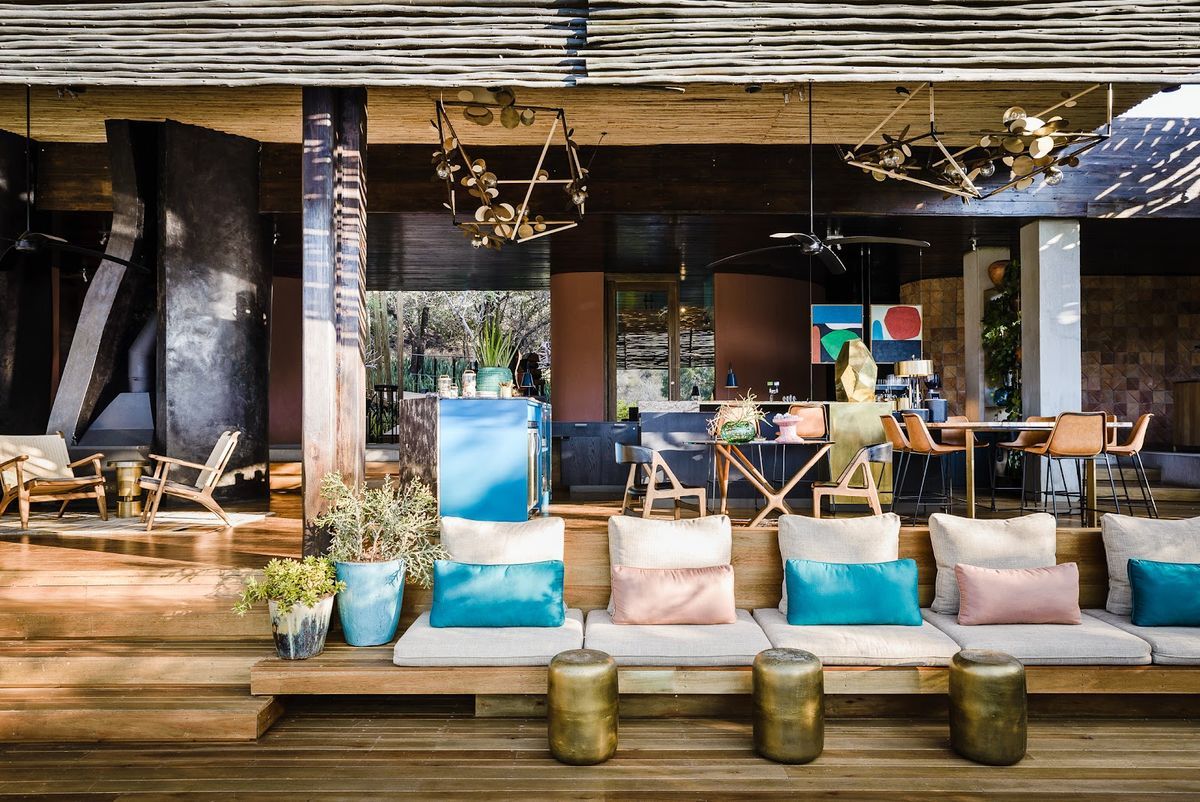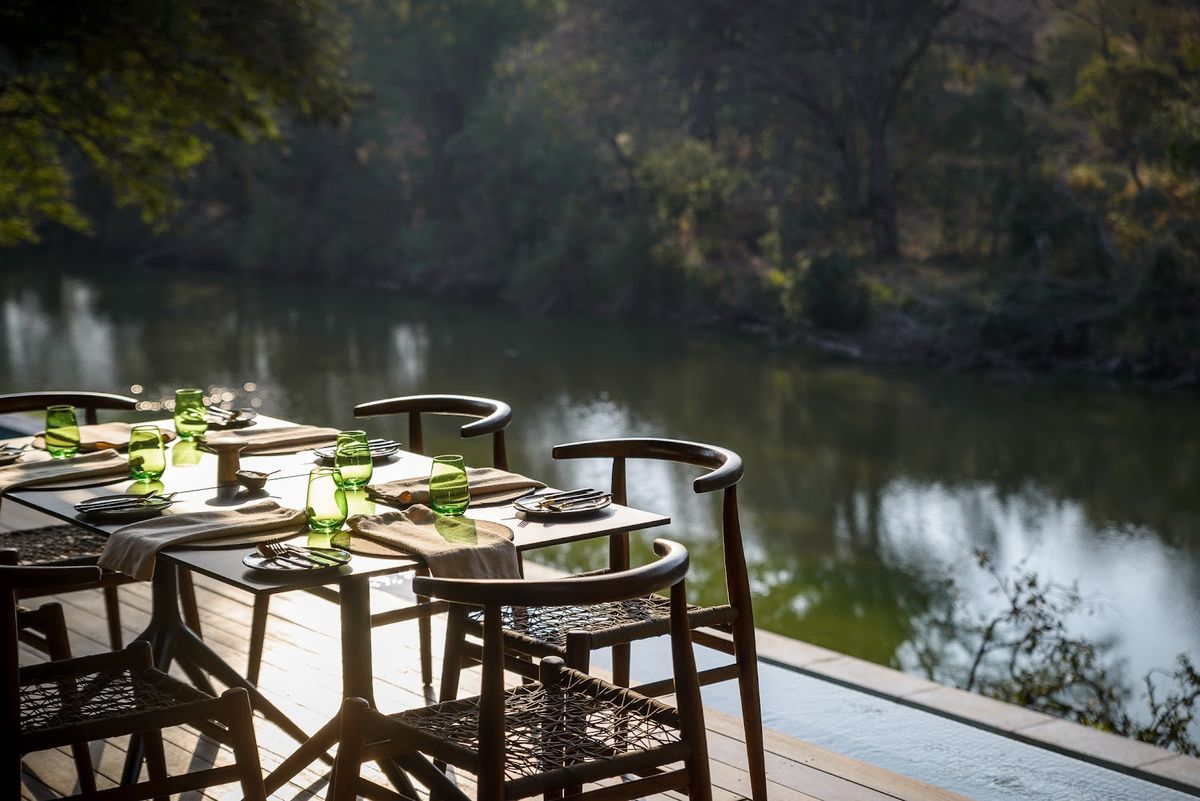
Seven suites under the riverine canopy of the Sweni River — the smaller, quieter, more intimate of Singita's two Kruger lodges, sharing the 33,000-acre private concession with Lebombo but trading its cliff for a closed forest of jackalberry and sycamore fig.
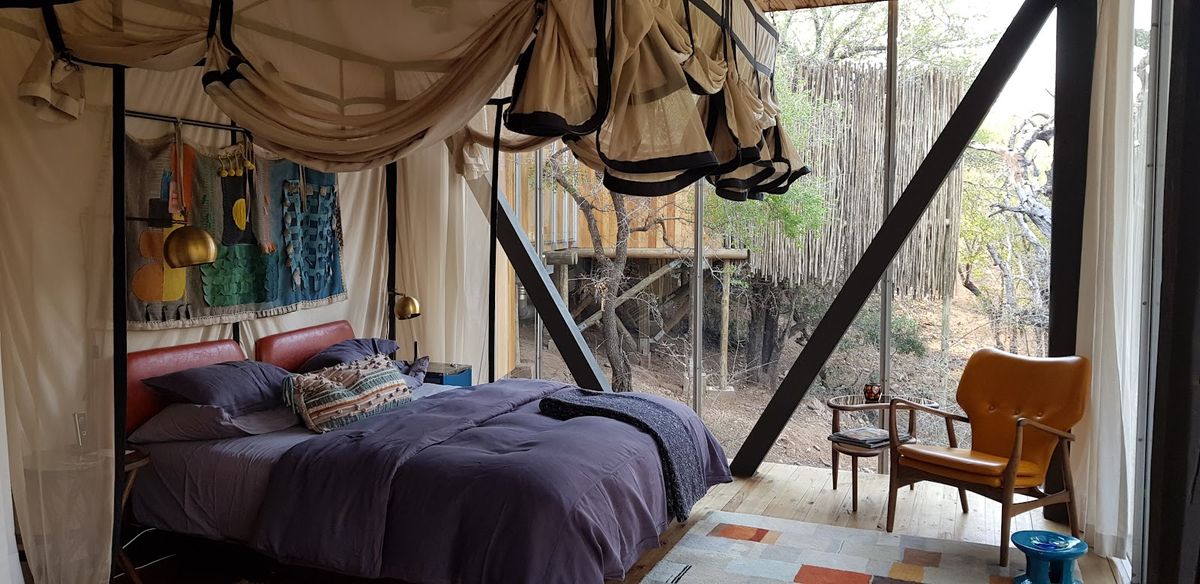
"Lebombo is the lookout; Sweni is the hideaway. Seven suites under a closed canopy of riverine forest, the same game cards on the table, and an evening boma where the elephants come to drink before sunset."
Singita Sweni is the smaller of the two Singita lodges on the eastern Kruger private concession, opened in 2003 alongside Lebombo and named for the small permanent tributary of the N'wanetsi on which it sits. Where Lebombo is a cliffside lookout, Sweni is the riverbank hide: the lodge is built underneath the closed canopy of a riverine forest of jackalberry, leadwood and sycamore fig, two metres back from the water. The seven suites are connected by raised wooden walkways and reached by an open main lodge that opens onto the riverbed. The intimate camp size — at seven keys, smaller than any other lodge in the Singita portfolio — is the central proposition. Sweni is where the operator's most experienced repeat guests come back to when they want the Singita standard without sharing the boma with thirty other guests.
The seven suites comprise six Sweni Suites and one Pool Suite. Each Sweni Suite is around 110 square metres — floor-to-ceiling glass walls onto the river, a sliding door system that can be fully retracted, an interior dressed in tones of polished river stone and weathered timber, and a private viewing deck cantilevered out over the Sweni riverbed. The bathrooms are stone and copper; the open-plan layout brings the bath into the bedroom; the outdoor shower drops a guest into the forest. The single Sweni Pool Suite — the most private accommodation on either lodge — adds a private swimming pool and a shaded private deck off the back of the suite. The 2017 refurbishment (the most recent across the property) was again by Cécile & Boyd and brought the interior palette to a darker, more enveloping register than Lebombo's bone-and-rust.
Game-drive operations at Sweni share the 33,000-acre concession with Lebombo but operate independent vehicles and trackers — guests at Sweni effectively have their own small share of the concession, working with a maximum of two vehicles in rotation versus Lebombo's four. The guide-to-guest ratio at Sweni is the highest in the Singita portfolio. The lodge offers the same activity menu: twice-daily game drives, walking safaris with armed senior rangers, night drives with spotlights, and a star bed at the boma for guests who request a sleep-out. The Sweni gallery — a small private collection of contemporary South African art in the lodge's lounge — is the only on-property gallery space across the Singita Kruger group.
The kitchen at Sweni runs a more pared-back menu than Lebombo's larger restaurant but draws from the same 6,500-label wine cellar; many guests book one or two nights at each lodge to experience both rhythms during a single safari. The Premier Spa is shared with Lebombo (a five-minute drive on the concession road); the airstrip and pre-arrival logistics are also shared. Sweni is the answer to the honest question of who comes to Kruger looking for the strictly smallest, quietest, most-screened-from-other-guests Singita experience — and for whom Lebombo's cliff drama would feel less like architecture and more like a stage set.
Honeymoon couples who choose Sweni over Lebombo do so for the camp size: seven suites total, two-vehicle game-drive operation, no large public spaces. Book the Pool Suite for the private plunge pool on the river or any of the standard Sweni Suites for the cantilevered-over-the-river deck. Private bush dinners on the concession, sleep-outs at the star bed, and a champagne sundowner on the Sweni riverbank are all standard inclusions for honeymoon stays.
The strongest anniversary play in the Singita Kruger portfolio is a four-night stay split between Lebombo and Sweni — the open cliffside view at one, the intimate forest cover at the other, the same trackers and the same cellar across the week. For shorter stays, Sweni alone runs as a quieter, more contemplative anniversary base than its sister lodge; the Pool Suite is the milestone-anniversary booking.
Singita Sweni is one of the strongest solo-traveller safari lodges in southern Africa — the small camp size and shared boma dinner table mean a solo guest is at home by day two rather than the third or fourth. The lodge offers a single solo-traveller game-drive vehicle on request and a small private library reading nook off the main lounge. The 2-night minimum here can stretch comfortably to a five- or seven-night reading-and-walking retreat.
Singita Sweni Lodge
Singita Private Concession
Sweni River, Kruger National Park 1350
South Africa
Reached by daily charter into the Singita airstrip from Johannesburg OR Tambo (75 min) or via Hoedspruit (45 min by road)
7 riverside suites
Sweni Suite from USD 3,200 pp/night (all-inclusive)
Sweni Pool Suite from USD 4,150 pp/night
Peak (June–August) from USD 3,745 pp/night
Rates include all meals, premium drinks, twice-daily game drives
Check-in: 2:00 PM
Check-out: 11:00 AM
Lodge opened 2003; comprehensive refurbishment 2017; interiors by Cécile & Boyd
33,000-acre shared private concession
Two-vehicle game-drive operation
Walking safaris with armed ranger
6,500-label wine cellar (shared with Lebombo)
Premier Spa (shared)
Sweni Gallery contemporary art
Star-bed sleep-outs
From USD 3,200 per person per night, all-inclusive. The Pool Suite is the lodge's most-requested category and typically books 10 to 12 months ahead. Combination stays with sister property Lebombo are arranged seamlessly by Singita reservations.
Book This Lodge →Singita's flagship — 15 glass-walled cliffside loft suites above the N'wanetsi River on the same 33,000-acre concession.
The Royal Portfolio's Thornybush flagship — six luxury suites, two Royal Suites, the most decorated guide team in Greater Kruger.
The full editorial ranking of luxury safari lodges across the Kruger ecosystem — from the Sabi Sand to the Timbavati to the eastern concessions.