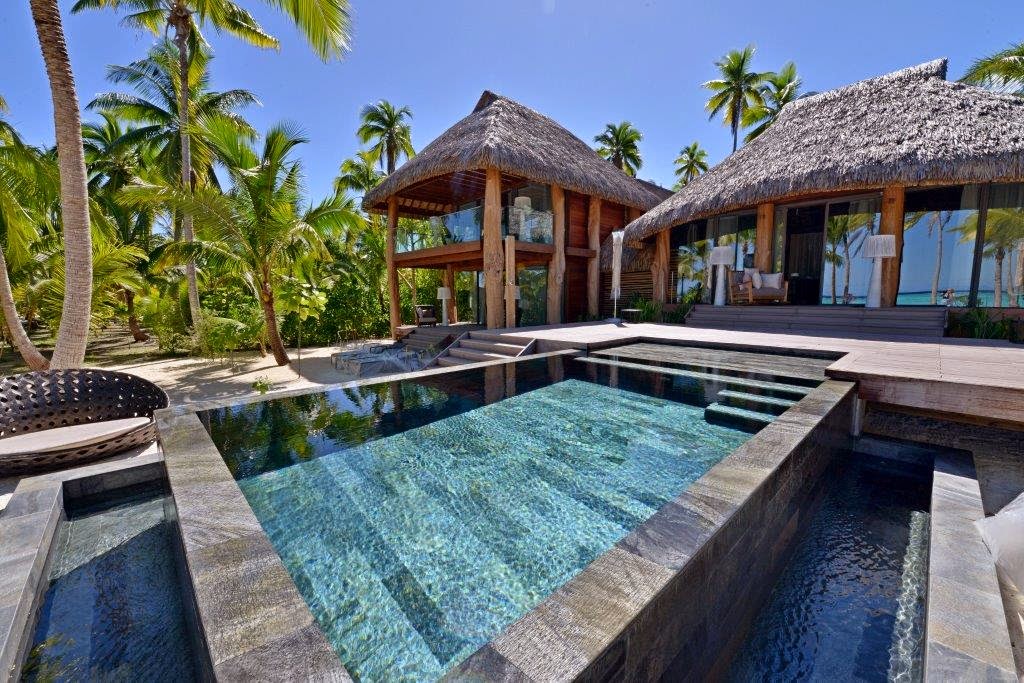
The short answer: Almost no luxury hotel is truly zero-emission, and most "carbon neutral" claims rest on purchased offsets rather than real cuts. Our pick for genuine on-site reduction is The Brando in French Polynesia, LEED Platinum with seawater cooling and 60 percent solar. Soneva and Bucuti & Tara lead on transparency. Verify certification and reduction, not the label.
"Carbon neutral" is one of the most abused phrases in luxury travel. A resort can print it on the homepage by writing a cheque for offsets while its actual energy use keeps climbing, so the label on its own tells you almost nothing. This guide separates the properties whose programs are genuinely substantive and documented from the ones selling a badge. It names what each hotel actually claims, who verified it, and whether the number rests on real reductions or on credits. We dropped every property whose current claim we could not confirm against its own reporting or a dated third-party source.
Affiliate disclosure: when you book through links on this page we may earn a commission at no extra cost to you. Our rankings are editorial and never paid for.
Reading on the go?
We send the best of these guides, plus subscriber-only offers, in one Sunday email.
What does "carbon neutral" actually mean for a hotel?
Carbon neutral is not the same as zero emissions, and the gap between the two is where greenwashing lives. In practice a serious carbon program does three things in order: it reduces emissions at source through renewable energy and efficient engineering; it offsets the residual it cannot yet eliminate by buying carbon credits; and it submits both steps to third-party verification. Weak claims skip straight to buying offsets while on-site emissions stay flat or rise. That distinction matters more than any homepage badge, because voluntary carbon credits have repeatedly been found to overstate their real climate benefit. So the properties below are judged on what they reduce and what they publish, not on the adjectives they use. Where a claim rests on offsets rather than genuine cuts, we say so plainly, because that honesty is the whole point of the list.
Quick comparison: what each hotel actually claims
Read this table before the write-ups. The column that matters most is the last one, reduction versus offset, because it separates hotels that have re-engineered their energy from hotels that mainly buy credits. Both can be defensible, but they are not the same thing.
| Property | What it actually claims | Verified by | Reduction vs offset |
|---|---|---|---|
| The Brando (French Polynesia) | LEED Platinum, ~60% solar, seawater cooling | LEED Platinum, AFNOR | On-site reduction; no neutral claim |
| Soneva Fushi (Maldives) | Carbon neutral since 2012, incl. indirect | Self-declared, 2% levy funded | Offsets plus ~40-45% solar |
| Bucuti & Tara (Aruba) | Certified carbon neutral since 2018 | CarbonNeutral, Green Globe, LEED Gold | Offsets plus ~40% clean energy |
| Populus (Denver) | "Carbon positive," 100% renewable power | Carbon credits, tree planting | Mostly offsets and removals |
| Singita (Tanzania, S. Africa) | Solar-run camps, conservation-led | On-site solar, published detail | On-site reduction; backup diesel |
| Eleven Deplar Farm (Iceland) | Geothermal heat on a renewable grid | Iceland national grid mix | Structural clean energy; no claim |
| Six Senses (brand) | GSTC-certified group-wide | Control Union, GSTC-accredited | Varies by property |
Figures are the most recent published by each property or a dated third-party source as of July 2026. Energy mixes shift as solar expands, so confirm current numbers at booking.
The verified low-impact luxury hotels for 2026
Our top pick for genuinely low-impact luxury is The Brando, because it reduces emissions at source rather than buying its way to a label. Soneva Fushi and Bucuti & Tara lead on transparency and certification. Each entry below covers what is real, what is claimed, and the honest catch.
1. The Brando, French Polynesia (best on-site reduction)
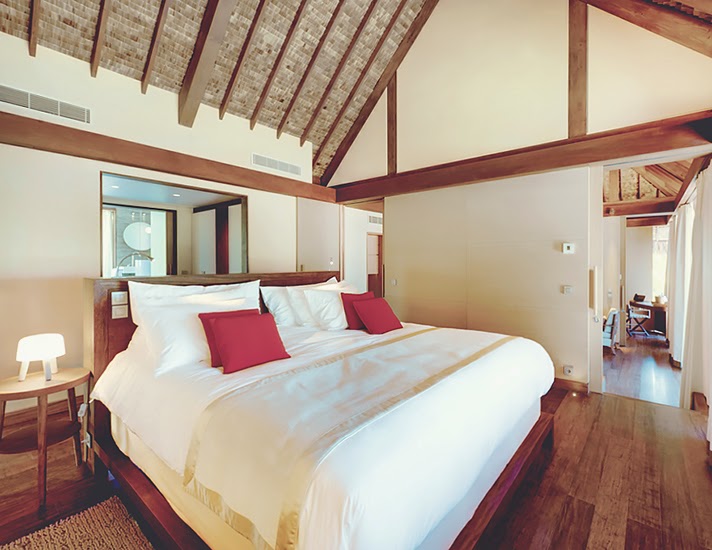
The Brando, on Marlon Brando's former atoll of Tetiaroa, is the clearest example of low-impact engineering rather than low-impact marketing. It was the first resort in the world to earn LEED Platinum, and the hardware backs the certification. Its Sea Water Air Conditioning pumps cold water up from the deep ocean to cool the buildings, cutting cooling energy by up to 90 percent, and more than 4,700 photovoltaic panels meet roughly 60 percent of the resort's electricity. Used cooking oil is handed off for biofuel, an organic garden feeds the kitchens, and it carries the AFNOR CSR Committed label. Notably, the resort does not actually market itself as carbon neutral, which is a point in its favour: the engineering does the talking.
Book: a one-bedroom villa for the beach frontage. Best for: travelers who want verified reduction over a marketing badge. Catch: reaching Tetiaroa requires a private flight from Tahiti, and those air miles dwarf anything the resort saves on the ground.
2. Soneva Fushi, Maldives (most transparent offset program)

Soneva is the most transparent operator on this list, which is a different thing from being the lowest emitter. The group has declared itself carbon neutral since 2012, and unusually its accounting reaches indirect emissions such as guest travel that most hotels ignore. Neutrality is funded by a mandatory 2 percent environmental levy on room revenue, channelled through the Soneva Foundation into offset projects. On the reduction side, solar-and-battery microgrids at Soneva Fushi and Soneva Jani now supply roughly 40 to 45 percent of power, saving on the order of 2 million litres of diesel a year, and the newest sister resort added a 2 megawatt floating solar plant. The Waste-to-Wealth program recycles about 90 percent of solid waste on site, targeting 100 percent by 2030. The honest read: the neutral label still leans on offsets, but Soneva publishes the numbers, which is exactly what a skeptical traveler should demand.
Book: a Crusoe Villa for barefoot privacy. Best for: travelers who want documented accounting, not slogans. Catch: "carbon neutral" here means offset-balanced, not zero-emission, and the seaplane transfer adds to your own footprint.
3. Bucuti & Tara Beach Resort, Aruba (most certified)
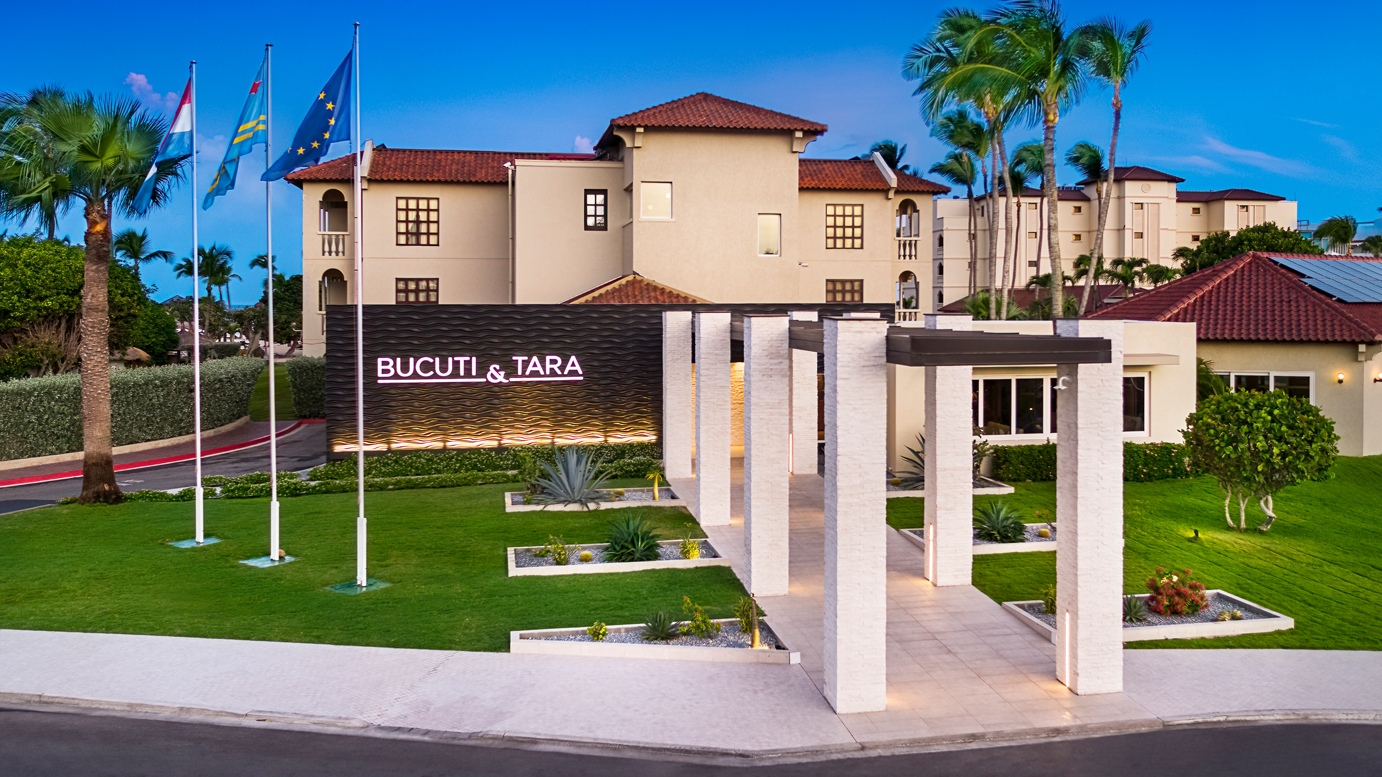
Bucuti & Tara is the most heavily certified property here and the most accessible, an adults-only, 104-room beach resort on Aruba's Eagle Beach rather than a remote private island. It has held certified CarbonNeutral status since 2018, the Caribbean's first and still its only hotel to do so, alongside Green Globe Platinum, LEED Gold and Travelife Gold. In early 2026 it became the only hotel in the world with two perfect 100 percent Green Globe scores. On the ground, a 173 kilowatt solar array supplies around 15 percent of energy, and with island wind and solar the resort runs on roughly 40 percent clean power; it is advancing toward Net Zero certification for its Scope 1 and 2 emissions in 2026. As with any neutral claim, offsets fill the gap, but few resorts anywhere document as much.
Book: a beachfront suite in the Tara wing. Best for: couples who want low-impact luxury without a long-haul flight from the Americas. Catch: at four stars it is refined and intimate rather than opulent, and 104 rooms fill fast in high season.
4. Populus, Denver (first carbon-positive US hotel)

Populus opened in downtown Denver in 2024 as the first hotel in the United States to call itself carbon positive, meaning it aims to offset more than it emits. The 265-room property, operated by Aparium, runs on 100 percent renewable electricity, sends food waste to an on-site biodigester, and was built with embodied-carbon-conscious materials and no on-site guest parking to discourage driving. The carbon-positive claim, though, rests heavily on removals and offsets: the hotel has purchased thousands of tonnes of carbon credits, plants a tree for every guest stay through the National Forest Foundation, and commits 1 percent of restaurant sales to regenerative farming. It is a genuinely ambitious new-build, but the "positive" framing is an accounting outcome bought largely with credits, and even academics quoted at opening cautioned that such claims are hard to verify.
Book: an upper-floor room for the aspen-inspired window "lids" and city views. Best for: design-led city travelers who want low impact without leaving the grid. Catch: carbon positive here is offset-and-removal driven, so read it as strong practice rather than proof of zero emissions.
5. Singita, Tanzania and South Africa (solar and conservation)

Singita pairs safari lodges with a long-horizon conservation model across large tracts of protected land, and its carbon story is inseparable from that mission. The energy detail is concrete: Singita Sabora Tented Camp in the Grumeti reserve runs a 130 kilowatt solar array with 504 panels and 900 kilowatt-hours of battery storage, which meets 100 percent of the camp's needs in the dry season and is expected to cut diesel use by more than 85 percent from a previous 8,000 litres a month. Singita Lebombo in the Kruger runs a comparable solar facility. This is real on-site reduction rather than an offset claim, though backup generators remain and neutrality is not the pitch. As with any group, confirm the specific lodge's energy mix, since programs are rolled out camp by camp.
Book: Sabora or Lebombo for the strongest documented solar setup. Best for: travelers who want conservation impact alongside low operational emissions. Catch: the long-haul flight plus a light-aircraft bush transfer is, again, the biggest line in your footprint.
6. Eleven Deplar Farm, Iceland (a clean grid, not offsets)
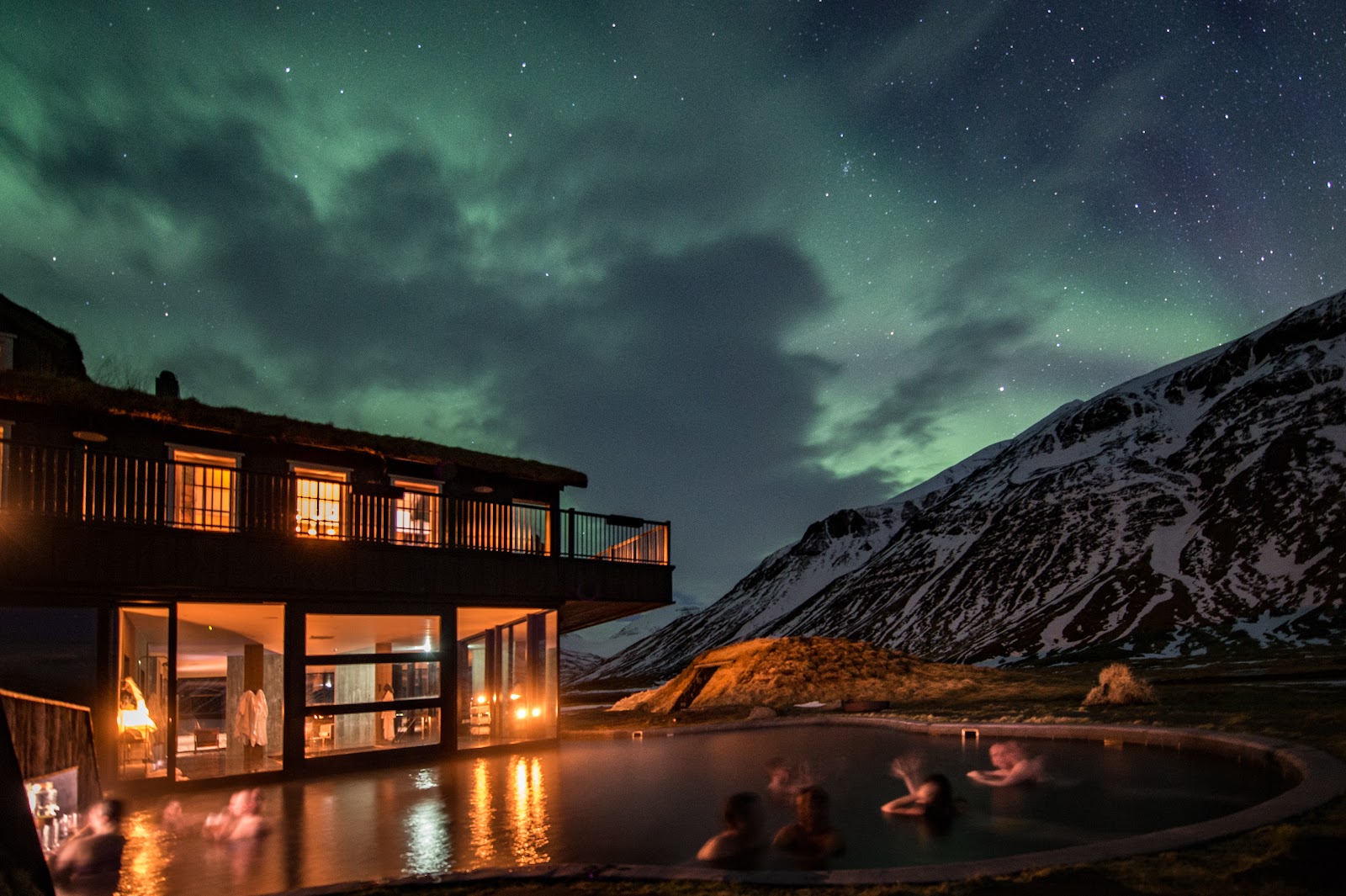
Deplar Farm's advantage is structural rather than promotional. This converted sheep farm on the remote Troll Peninsula sits on Iceland's national grid, which runs almost entirely on geothermal and hydro power, and the lodge itself is geothermally heated, including its indoor-outdoor pool. That does not make a stay carbon neutral once guest flights are counted, and Eleven does not claim it does. But its operational energy is among the cleanest of any remote luxury lodge on earth, and it is clean because of where it is, not because of credits it bought. For anyone wary of offset math, that structural distinction is worth a great deal.
Book: a room with a valley view; the whole lodge suits buyouts. Best for: adventure travelers who prefer a clean grid to an offset certificate. Catch: access is a long drive or charter flight from Reykjavik, and rates sit at full private-lodge level.
7. Six Senses (the brand: strong, but confirm per property)
Six Senses is one of the more credible names in the sector, and in January 2025 all of its operating hotels were certified under a GSTC-accredited multi-site audit by Control Union, a more rigorous step than most chains take. Individual properties carry serious credentials, including LEED Platinum at Southern Dunes and Vana and LEED Gold in Rome, and the group runs organic gardens, a plastic-freedom program and a sustainability fund worth 0.5 percent of hotel revenue. The caveat is that Six Senses publishes no single brand-wide net-zero figure, and commitments vary property by property. Treat "Six Senses" as a strong starting point rather than a blanket carbon guarantee, and ask the specific hotel for its current energy mix and certification.
How do you verify a hotel's carbon claim in two minutes?
Before you trust a "carbon neutral" badge, check three signals. First, third-party certification: a recognized standard such as LEED, Green Globe or a GSTC-accredited audit carries far more weight than a self-made logo. Second, published metrics: a serious property shows its total footprint, its offset purchases and its energy mix, not just a slogan. Third, a reduction trajectory: the hotel should be cutting emissions year on year rather than buying more credits to cover a growing footprint. A property that shares numbers is telling you something real. One that shares only adjectives is selling you something. When the two conflict, believe the numbers.
The honest cons: why "carbon neutral" is not the same as low carbon
Two hard truths keep this list short and skeptical. The first is that offsets are contested. Many voluntary carbon credits have been found to overstate their impact, so "carbon neutral via offsets" is not the same as low-emission, and a careful traveler is right to weight on-site reduction more heavily than the size of an offset budget. The second is that for a remote luxury resort, the single largest source of emissions is almost always the guests' flights, which no hotel program fully addresses. A long-haul trip to a solar-powered island is not a low-carbon holiday in absolute terms, no matter what the resort has done on the ground. The honest framing is harm reduction and better practice, not zero impact. The properties above earn their place by being transparent about exactly that, and the ones that quietly overclaim are the ones we left off.
Five rules for choosing a genuinely low-carbon hotel
These are the shortcuts we come back to. They cut a greenwashed shortlist down fast.
- Prioritize third-party certification and published metrics over the phrase "carbon neutral."
- Weight on-site reduction, solar, seawater cooling, clean grids, above offset purchases.
- Expect a price premium, because genuine renewable infrastructure is expensive to build.
- Confirm claims at the specific property, not just the brand.
- Account for your own flights honestly; they usually dwarf everything the hotel controls.
For the wider picture, see our sustainable and eco-friendly hotel guide, the best solar-powered hotels, and eco certifications for hotels explained.
Frequently asked questions
Are any luxury hotels truly carbon neutral?
Almost none are neutral through emission cuts alone. Most reach the label by buying offsets. Bucuti & Tara has held certified CarbonNeutral status since 2018 and Soneva has declared neutrality since 2012 including indirect emissions, but both lean on purchased offsets. The Brando does the most at source and does not actually claim to be carbon neutral.
What is the difference between carbon neutral, net zero, and carbon positive?
Carbon neutral usually means balancing emissions with offsets. Net zero is stricter: deep verified reductions first, with only a small residual balanced by high-quality removals. Carbon positive, the Populus claim, means offsetting more than you emit, again mostly through credits and tree planting rather than eliminating emissions.
Does a carbon neutral label mean the hotel actually cut its emissions?
Not necessarily. A hotel can buy offsets while its own energy use rises, so the label alone tells you little. Weight on-site reduction, such as a large solar array or seawater cooling, more heavily than the number of offsets bought.
How can I verify a hotel's carbon claim in two minutes?
Check for recognized third-party certification such as LEED, Green Globe or a GSTC-accredited body; published footprint, offset and energy-mix figures; and a year-on-year reduction trajectory. Numbers beat adjectives.
Which featured hotel reduces the most emissions at source?
The Brando. It was the first resort to earn LEED Platinum, its seawater cooling cuts air-conditioning energy by up to 90 percent, and 4,700-plus solar panels meet around 60 percent of its electricity. That is genuine reduction, not an offset purchase.
Is flying to a remote eco-resort still low carbon?
No. For a remote resort the largest source of emissions is usually the guests' flights, which no hotel program fully offsets. Fly less often, stay longer, and pick properties that reduce at source.
Are brand-wide claims like Six Senses trustworthy?
They are a strong starting point, not a guarantee. All operating Six Senses hotels were GSTC-certified in January 2025, but the brand publishes no single net-zero figure and commitments vary by property, so confirm the specific hotel.
For more, compare the hotels with farm-to-table restaurants and the best hotels supporting local communities, both close cousins of a real low-impact stay.