Sustainable luxury is now the default claim rather than the differentiator, which makes it harder, not easier, to tell real from performative. This guide gives you a working test: the six signals of genuine eco-luxury, the certifications that carry weight, the six properties leading the category, and the three questions to ask before you book.
Affiliate disclosure: when you book through links on this page we may earn a commission at no additional cost to you. Hotels are ranked editorially, we never accept payment for placement.
Save this for later
Get our guides plus subscriber only hotel offers by email, every Sunday.
What genuine sustainability looks like
Genuine sustainability shows up as measurable practice, not adjectives. The most credible properties can point to six specific signals, and the more of them a hotel meets, the more seriously you can take its claims.
Verified independent certifications
Look for third-party marks with real audits behind them: LEED for architecture and operations, Green Key and EarthCheck for environmental management, Travelife for sustainable tourism, and B Corporation for verified social and environmental performance. We break these down in our guide to eco certifications for hotels.
Published environmental data
Real eco-luxury publishes numbers: water use per guest, energy consumption, waste diverted from landfill, carbon emissions per night. Greenwashing sticks to qualitative language because there is nothing to measure.
Community engagement
Documented local hiring, education funding and supply-chain commitments show that sustainability extends to people, not just carbon. See our roundup of hotels supporting local communities.
Construction philosophy
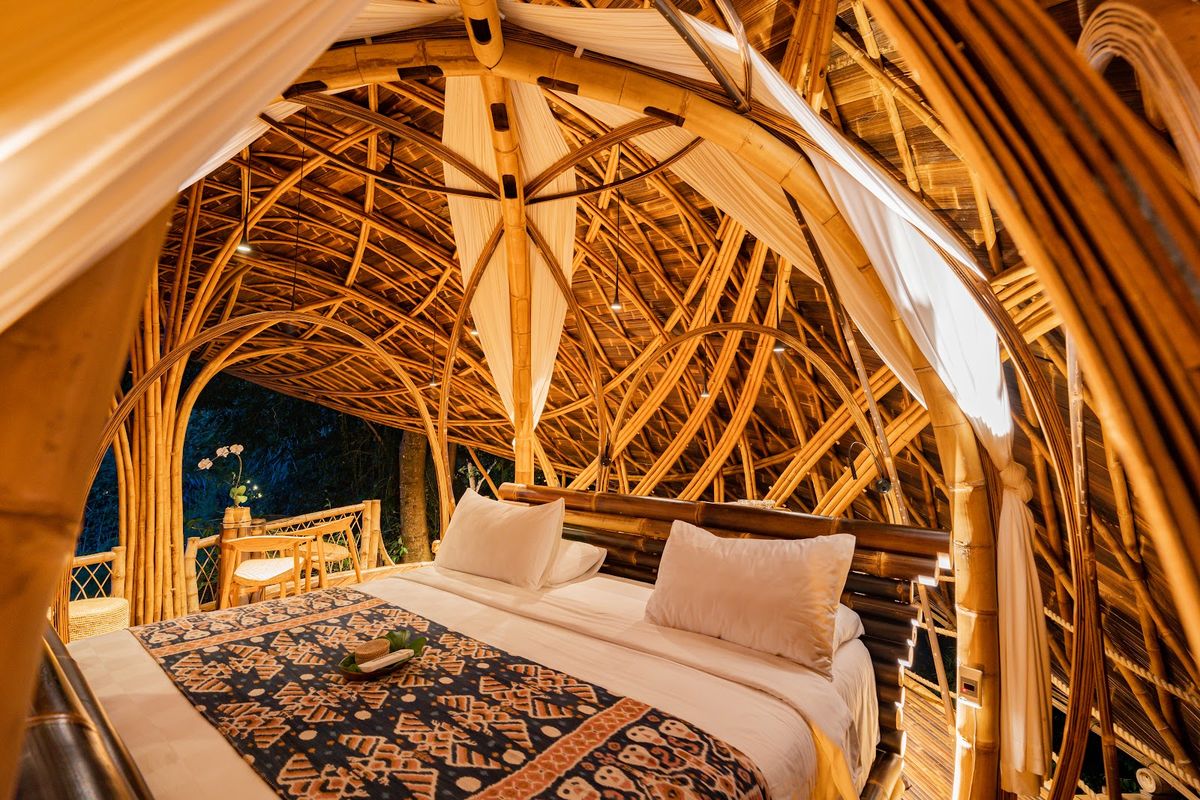
Local materials, low-impact building and restoration over new construction all reduce embodied carbon. A converted farm or a bamboo structure often carries a far lighter footprint than a new-build resort.
Operational discipline
In-house water bottling to remove plastic imports, on-site composting, solar or geothermal power and in-property agriculture are the day-to-day mechanics of a serious programme. Our supply-chain and sourcing guide goes deeper on the food side.
Guest engagement
Optional tours of recycling facilities, talks on local conservation and hands-on programming signal a hotel that treats sustainability as part of the experience rather than a back-office cost.
The category leaders in 2026
These six properties are the recognised front-runners, each open and bookable and each pairing independent reporting with concrete practice. The table summarises what distinguishes them; profiles and trade-offs follow.
| Hotel | Location | Sustainability signature |
|---|---|---|
| Soneva | Maldives, Thailand | Carbon-mitigation levy, in-house glass and water, waste-to-wealth |
| Six Senses | Multiple | Brand-wide standards, on-site gardens, Earth Lab reporting |
| The Brando | French Polynesia | Seawater air-conditioning, solar, on-site agriculture |
| Eleven Deplar Farm | Iceland | Geothermal power, converted 15th-century farm, low-impact build |
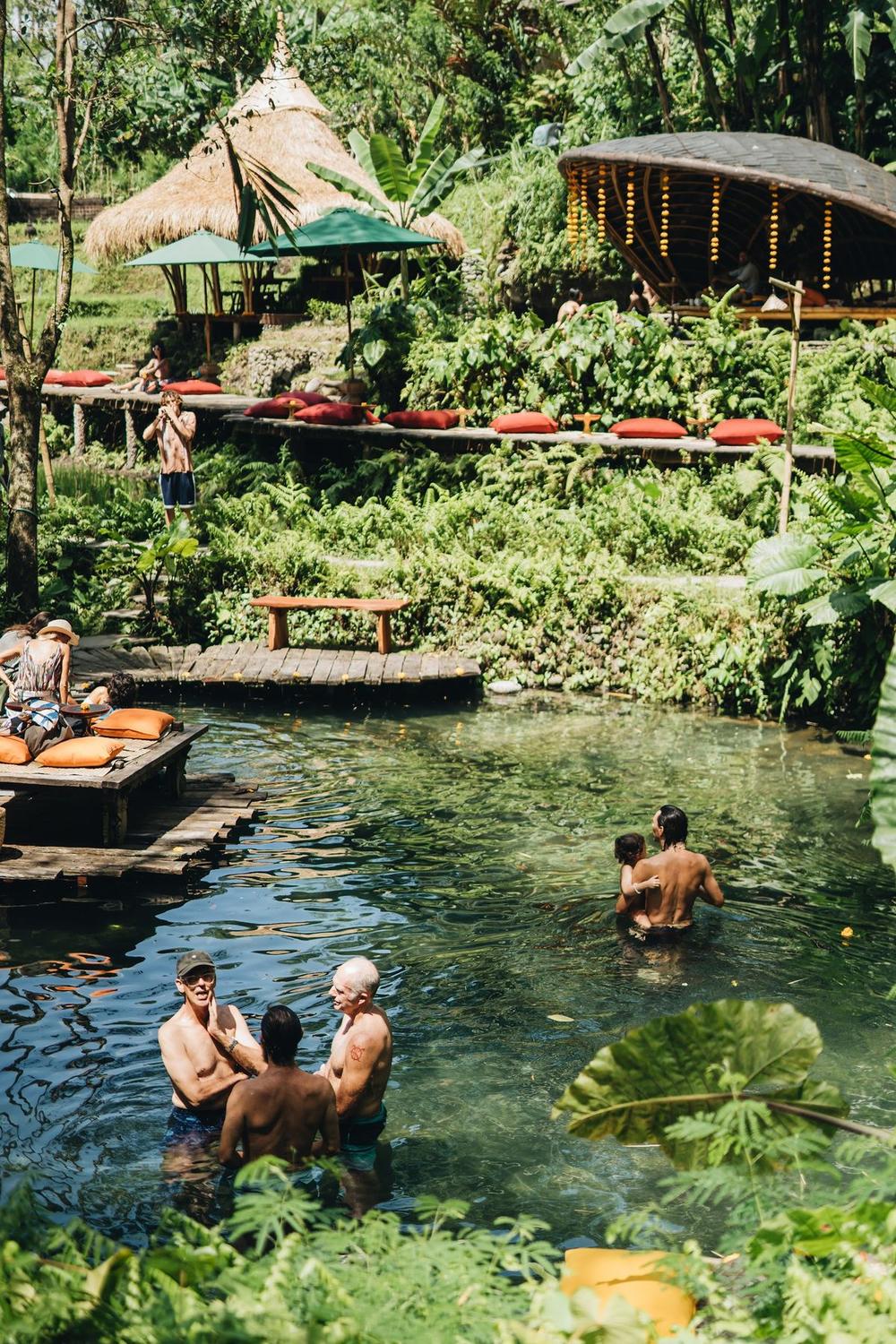
| Bambu Indah | Ubud, Bali | Bamboo and reclaimed-timber construction, natural pools |
| Singita | Tanzania, Southern Africa | Conservation model funded by guest spend |
Soneva (Maldives, Thailand)
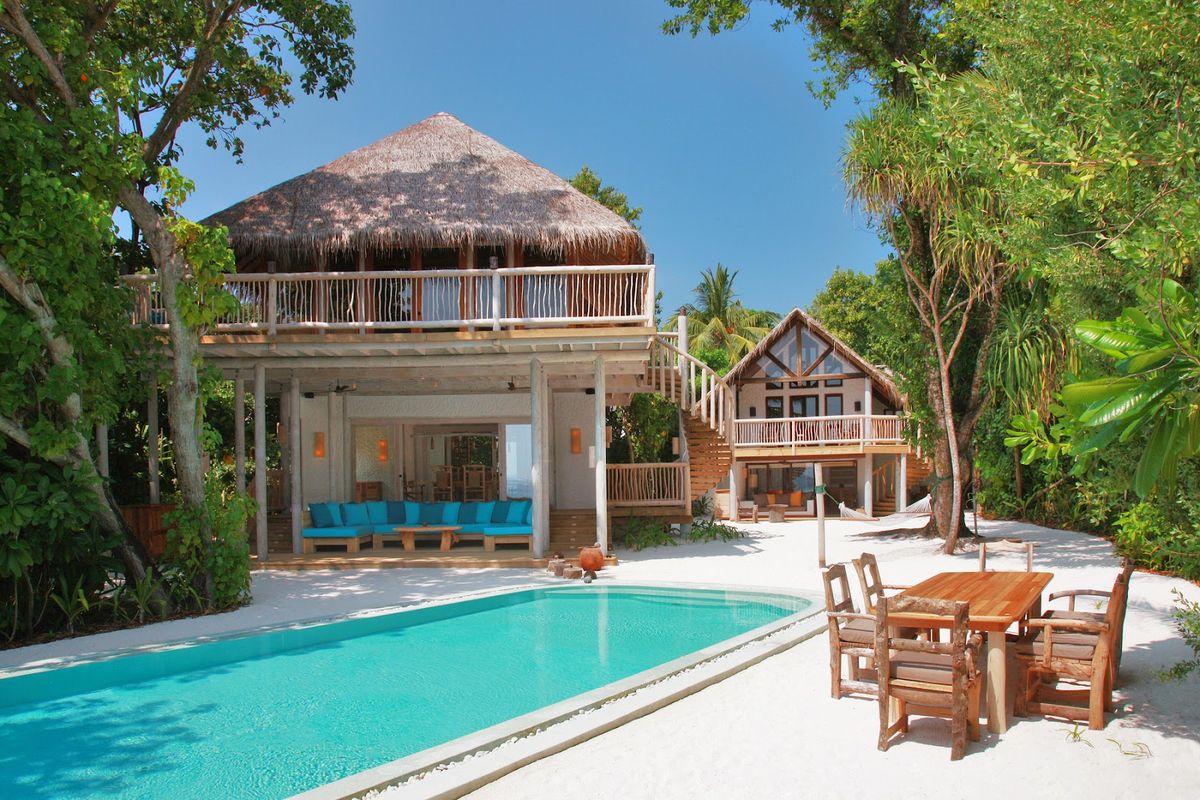
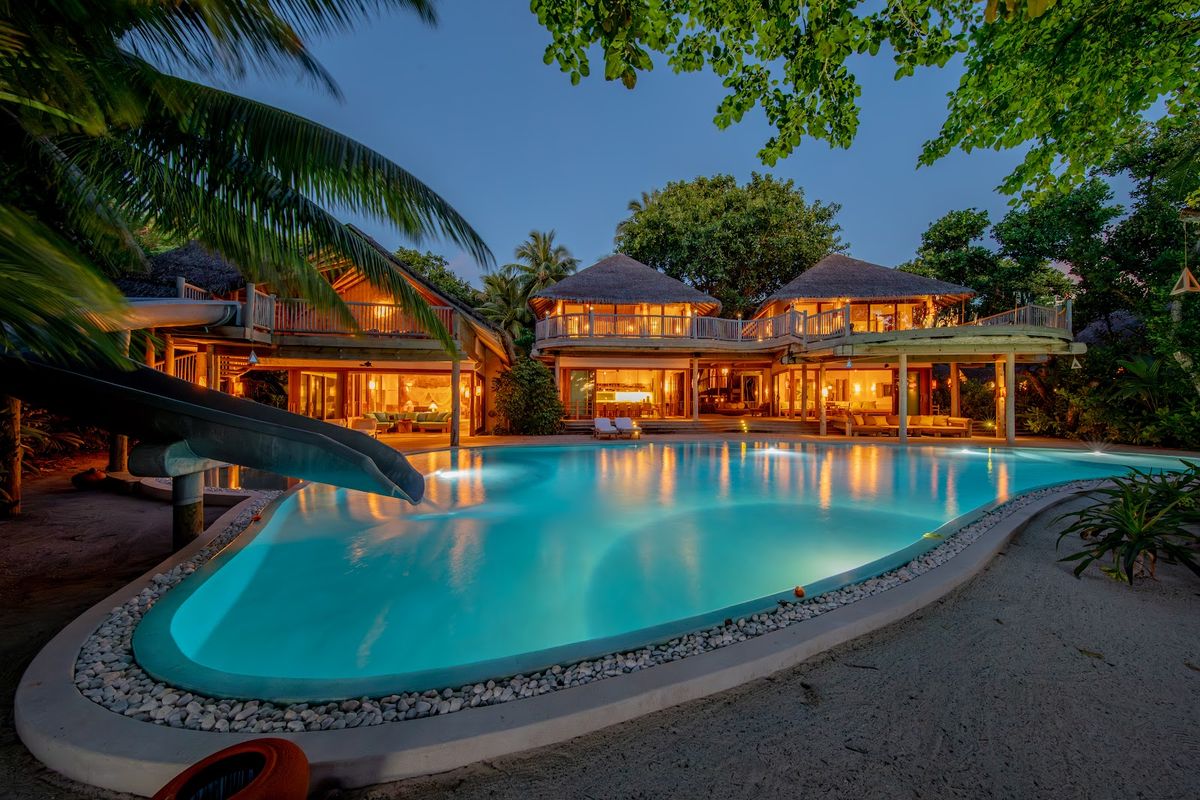
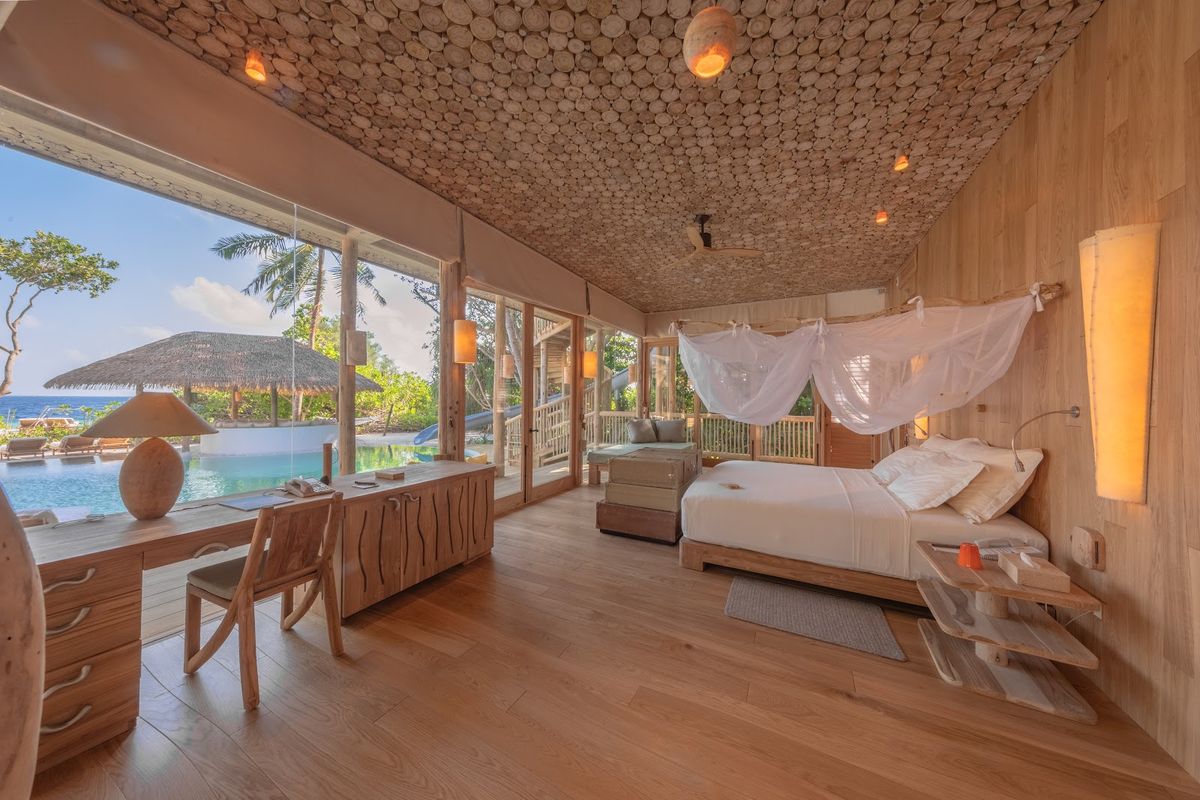
Soneva sets the standard for what an eco-luxury operation can look like when it is designed in from the start: a carbon-mitigation levy on every stay, in-house glass production from recycled bottles, its own water bottling, and a widely cited waste-to-wealth recycling programme. The honest caveat is that the emissions of long-haul travel to the Maldives dwarf most on-island savings, so this is best treated as a lower-impact version of a long trip, not a low-impact one. See more Maldives resorts.
Six Senses (multiple locations)
Six Senses runs brand-wide sustainability standards, on-site organic gardens and Earth Lab reporting across a global portfolio, which makes it one of the easiest groups to verify property by property. The trade-off is variation between locations, so read the individual resort's data rather than relying on the brand's reputation.

The Brando (French Polynesia)
On the atoll of Tetiaroa, The Brando is one of the best-engineered examples of the genre: solar power, deep seawater air-conditioning that slashes cooling energy, and on-site agriculture. It is close to carbon-neutral in operation. The con is that it sits at the very top of the market and is genuinely remote. It also appears in our regenerative travel and conservation lodges guide.
Eleven Deplar Farm (Iceland)
A converted 15th-century sheep farm on Iceland's Troll Peninsula, Deplar Farm runs on Iceland's abundant geothermal energy and keeps its footprint low through restoration rather than new building. The trade-off is that it is an adventure lodge with seasonal opening and a small room count, priced accordingly, so it suits activity-led trips more than a conventional resort stay.
Bambu Indah (Bali)
Bambu Indah in Ubud is the low-impact-construction case study: antique Javanese timber houses and bamboo structures set on a jungle ridge, with natural spring-fed swimming pools instead of chlorinated ones. It is affordable relative to the others here. The con is that it is a rustic, characterful property rather than a full-service luxury resort, so amenities are deliberately pared back. Browse more Bali hotels.

Singita (Tanzania and Southern Africa)
Singita, including Sasakwa Lodge in the Grumeti reserve, is the conservation-led model: guest revenue directly funds anti-poaching, habitat restoration and community programmes across large protected areas. Sustainability here is measured in acres protected as much as in energy saved. The trade-off is safari-level pricing and logistics, and supply constraints inherent to remote reserves.
Sub-categories worth knowing
Sustainability is not one thing, so it helps to know which strand you actually care about. For verified zero-operational-emissions properties, see our best carbon-neutral hotels. For on-site generation, see best solar-powered hotels. For the food angle, see hotels with farm-to-table restaurants, and for offsetting programmes, our carbon-offset hotel guide. Deciding which sub-category matters most to you is the fastest way to shortlist.
How to evaluate before booking
Three questions do most of the work. First, what specific certifications do you hold? Real sustainable hotels cite them immediately; the vague ones change the subject. Second, can you share your annual sustainability report? Genuine programmes publish; greenwashing does not. Third, what is your carbon footprint per guest night? Hotels that track it will tell you, and the willingness to answer is itself the signal. If a property scores well on all three, the marketing is probably backed by practice.
Frequently asked questions
What makes a hotel genuinely eco-friendly rather than greenwashed?
A genuinely eco-friendly hotel holds independent certifications such as LEED, Green Key, EarthCheck, Travelife or B Corp, publishes measurable data like energy and water use per guest, and can describe specific practices such as on-site renewable power, in-house water bottling and local sourcing. Greenwashing relies on qualitative claims with no verifiable numbers.
Which certifications actually matter for sustainable hotels?
The most credible are LEED for building and operations, Green Key and EarthCheck for environmental management, Travelife for sustainable tourism, and B Corporation for verified social and environmental performance. GSTC accreditation underpins several of these. Self-created badges with no independent audit carry little weight.
Is sustainable luxury more expensive?
Usually yes. Renewable infrastructure, local sourcing, higher staffing and small room counts cost more to run, so genuine eco-luxury tends to be priced at or above conventional luxury, not below. Very cheap hotels advertising heavy green credentials are worth scrutinising.
Which hotels lead the sustainable-luxury category in 2026?
Soneva, Six Senses, The Brando, Singita, Eleven Deplar Farm and Bambu Indah are among the recognised leaders, each combining independent reporting with concrete practices such as carbon-neutral operations, on-site agriculture, geothermal or solar power and low-impact construction.
How we choose: our editors assess each property against independent certifications, published sustainability reporting and the property's own current information, cross-checked against recent verified guest reviews, and we confirm open or closed status before publishing. See our full methodology.