A hotel's supply chain, what it feeds you and how it sources materials, is where sustainability is real or just marketing. The most credible properties grow food on-site or buy it within the region, eliminate single-use plastic, and publish the numbers. Below is what to look for, nine hotels whose sourcing you can verify, and the questions that separate practice from greenwashing.
Affiliate disclosure: when you book through links on this page we may earn a commission at no additional cost to you. Hotels are ranked editorially, we never accept payment for placement.
Want the shortlist?
Hotel picks and subscriber only special offers, curated weekly. Free to join.
What a sustainable supply chain actually means
A sustainable supply chain means the hotel can trace and account for what it consumes, from the eggs on the breakfast table to the bathroom amenities, and reduces the distance, waste and plastic involved at each step. It is a practice, not a slogan, and it shows up in six concrete areas.
Farm-to-table and on-site growing
The strongest signal is a working farm or kitchen garden on the property. Vegetables, herbs and eggs harvested hours before service cut transport emissions to near zero and give the kitchen a reason to cook seasonally. Heckfield Place and COMO Castello del Nero are two European examples that grow a meaningful share of their own produce. See our companion guide to hotels with farm-to-table restaurants.
Local and regional sourcing
Where a hotel cannot grow it, the next best thing is buying it nearby. A credible programme sources most of its food from within roughly 100 miles, which shortens the chain, supports regional farmers and keeps money in the local economy. It also tends to taste better because it is fresher and in season.
Responsible seafood
Responsible seafood means Marine Stewardship Council certification or day-boat sourcing from local fishermen, and a menu that flexes with the catch rather than flying in the same species year-round. Ask whether the hotel can tell you which boat or fishery a dish came from.
Plastic elimination
Serious properties have removed single-use plastic from guest-facing operations: refillable bathroom dispensers, glass or in-house-bottled water, no plastic straws or wrapped amenities. Soneva has bottled its own water for years specifically to end plastic imports.
Water, laundry and energy
Behind the scenes, water-recycling laundry systems, eco-detergents, towel and linen reuse programmes and on-site renewable energy all reduce the operational footprint. These are unglamorous but measurable, and hotels that track them will usually share the figures.
Composting and waste
On-property composting and comprehensive recycling close the loop, turning kitchen and garden waste back into soil for the farm. Zero-waste-to-landfill targets are increasingly common and easy to ask about.
Nine hotels with supply chains you can verify
These nine properties are all currently open and bookable, and each publishes or openly describes its sourcing so you can check the claims. The table maps each to its region and its supply-chain signature; profiles and honest trade-offs follow.
| Hotel | Region | Supply-chain signature |
|---|---|---|
| Heckfield Place | Hampshire, UK | Biodynamic Home Farm and market garden feeding a Green Michelin-starred kitchen |
| COMO Castello del Nero | Tuscany, Italy | 740-acre estate producing its own olive oil, vegetables and honey |
| Soneva Fushi | Maldives | In-house water bottling, organic gardens, waste-to-wealth recycling |
| The Brando | Tetiaroa, French Polynesia | Atoll-grown produce, lagoon seafood, seawater air-conditioning |
| Singita (Grumeti) | Tanzania | Local-farm partnerships; guest spend funds conservation |
| Six Senses | Multiple | Brand-wide sourcing standards, on-site gardens, Earth Lab reporting |
| Aman Tokyo | Tokyo, Japan | Japanese regional and seasonal sourcing across its dining |
| Costanoa Lodge | Pescadero, California | Coastal-farm partnerships and locally sourced Californian produce |
| Daios Cove | Crete, Greece | Cretan produce and estate olive oil in a short island supply chain |
Heckfield Place, Hampshire
Heckfield Place is the clearest farm-to-table case in Britain: a biodynamic Home Farm, market garden, orchards and dairy on 400 acres feed the Green Michelin-starred Marle and the open-fire Hearth. The kitchen genuinely cooks what the farm produces, so menus shift with the season. The trade-off is that this is a remote, deliberately quiet country house an hour from London, not a city base with endless choice.

COMO Castello del Nero, Tuscany
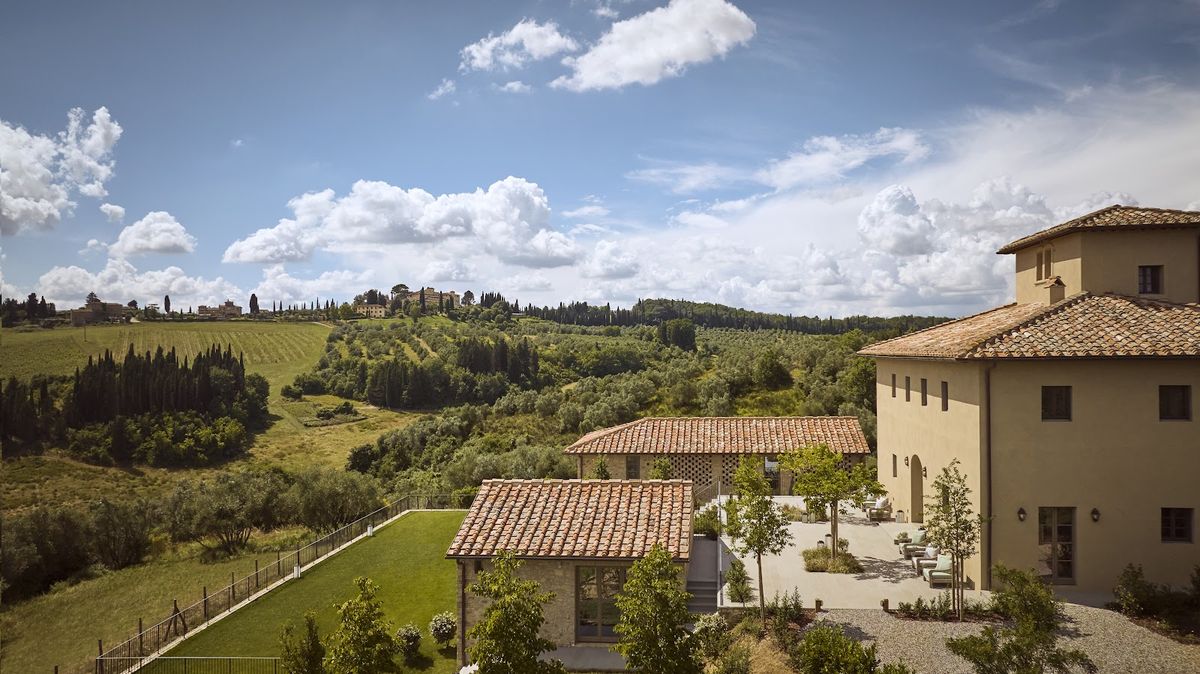
This twelfth-century castello sits on a 740-acre estate near Florence that produces its own olive oil, vegetables and honey, with the Michelin-starred La Torre drawing on the land around it. It is a strong pick if you want provenance you can taste and walk through. The con is price and formality: this is a serious splurge, and the estate setting means you will want a car for the wider region. Browse more Tuscany hotels.

Soneva Fushi, Maldives
Soneva Fushi is the category's standard-setter for closing loops in a remote location: in-house water bottling to end plastic imports, organic gardens, and a well-documented waste-to-wealth recycling programme. It backs this with published sustainability reporting. The trade-off is the carbon of getting to the Maldives in the first place, which no on-island programme fully offsets, so pair it with a longer stay. See more Maldives resorts.
The Brando, French Polynesia
On the private atoll of Tetiaroa, The Brando grows produce on-site, takes seafood from the surrounding lagoon and cools its rooms with deep seawater air-conditioning, a genuinely engineered piece of sustainability rather than a talking point. The con is remoteness and cost at the very top of the market. Anyone weighing this property should also read our note on regenerative travel and conservation lodges.

Singita, Tanzania and Southern Africa
Singita's lodges combine local-farm partnerships for the kitchen with a broader model in which guest revenue funds anti-poaching and habitat conservation across large reserves. Sourcing is one strand of a wider land-stewardship story. The trade-off is safari logistics and price, and the fact that supply in remote reserves is inevitably more constrained than in a city.
Six Senses, multiple locations
Six Senses applies brand-wide sourcing standards, on-site organic gardens and its Earth Lab sustainability reporting across a global portfolio, which makes it one of the easier groups to check property by property. The caveat is consistency: standards are set centrally, but execution varies by location, so read the individual resort's data rather than assuming the brand average.
Aman Tokyo, Costanoa Lodge and Daios Cove
Three more with credible, if less headline-grabbing, short supply chains. Aman Tokyo leans on Japanese regional and seasonal sourcing, a natural fit for a cuisine built around provenance; browse more Tokyo hotels. Costanoa Lodge on the Californian coast works with nearby coastal farms and a locally driven kitchen. Daios Cove in Crete benefits from a naturally short island supply chain, with Cretan produce and estate olive oil. None publishes the depth of data that Soneva or Six Senses do, so treat these as good rather than best-in-class.
How to tell a real programme from greenwashing
The fastest test is specificity: a hotel with a real programme answers sourcing questions with names and numbers, while greenwashing hides behind adjectives. Ask three questions before you book. First, where do your eggs and vegetables come from? A precise answer, a named farm or an on-site garden, is a good sign. Second, can you share your latest sustainability report? Properties with genuine commitments publish them; those without will deflect. Third, what independent certifications do you hold? Look for recognised marks such as GSTC, B Corp, Green Key or Travelife rather than self-invented badges. If the answers are vague on all three, assume the sustainability page is marketing.
What you can do as a guest
You have more leverage than you think, because hotels track what guests ask for. Order from the local or farm menu when one exists, since that is where the sustainable sourcing concentrates. Use the refillable bath products and water bottles rather than requesting alternatives. Ask your specific sourcing questions at booking, not just on arrival, because demand signals shape purchasing. And choose properties that make verifiable commitments over those that make only claims, using the broader sustainable-hotel evaluation guide and our hotels supporting local communities roundup as starting points.
Frequently asked questions
What makes a hotel supply chain genuinely sustainable?
A genuinely sustainable supply chain sources most food locally or on-site, can name specific farms and suppliers, eliminates single-use plastics, and publishes measurable data such as food miles, waste diverted or third-party certifications like GSTC, B Corp or Green Key. Vague claims without traceable detail usually signal marketing rather than practice.
Which luxury hotels have the most transparent sourcing?
Heckfield Place in Hampshire, COMO Castello del Nero in Tuscany, Soneva Fushi in the Maldives, The Brando in French Polynesia and Singita's African lodges are among the most transparent, each running on-site farms or documented local-supplier programmes and publishing sustainability reporting you can read before booking.
What should I ask a hotel to check its sourcing?
Ask three specific questions: where do your eggs and vegetables come from, can you share your latest sustainability report, and what percentage of your produce is grown or sourced within the region. Hotels with real programmes answer precisely; hotels without give general, unquantified replies.
Does sustainable sourcing mean a worse guest experience?
Usually the opposite. On-site and local sourcing tends to mean fresher, more seasonal food and a stronger sense of place. The trade-offs are narrower menus, more seasonality and occasionally higher prices, not lower quality.
How we choose: our editors assess each property's sourcing against published sustainability reporting, independent certifications and the property's own current information, and we verify open or closed status before publishing. We never accept payment for placement. See our full methodology.